
Few bands have left a mark on rock and metal as indelible as Iron Maiden. Emerging from the gritty streets of East London in the late 1970s, they quickly rose to prominence during the New Wave of British Heavy Metal, but their impact extends far beyond a single movement. Iron Maiden didn’t just play music; they crafted an entire universe—one that influenced generations of musicians, inspired devoted fans, and helped define what modern rock and metal sound like today.
Crafting a Sound That Defined an Era
Iron Maiden’s music is instantly recognizable. The dual guitar harmonies of Dave Murray and Adrian Smith, later joined by Janick Gers, became a defining feature, creating a sound both melodic and aggressive. Their riffs are complex yet memorable, blending technical mastery with a sense of urgency that pulls listeners in from the first note. Unlike many of their contemporaries, Iron Maiden embraced epic storytelling through music, taking listeners on journeys that span history, mythology, and fantasy.
Steve Harris, the band’s bassist and primary songwriter, has often been credited as the architect of Iron Maiden’s unique sound. His galloping bass lines are more than rhythmic foundations; they are central narrative devices, propelling songs forward with relentless energy. The way Harris melded intricate bass with soaring guitar work and Bruce Dickinson’s commanding vocals set a blueprint for countless bands in metal and hard rock. Iron Maiden’s approach demonstrated that heavy music could be sophisticated, ambitious, and emotionally resonant all at once.

The Power of Vocals and Narrative
Bruce Dickinson’s voice is one of the most iconic in rock history. His wide vocal range, theatrical delivery, and ability to convey both raw power and subtle nuance made him a perfect vessel for Iron Maiden’s storytelling. Songs like “Hallowed Be Thy Name” and “Rime of the Ancient Mariner” aren’t just tracks; they are musical epics. Dickinson’s voice doesn’t merely sing lyrics—it acts, it emotes, and it transforms narratives into visceral experiences.
This commitment to narrative in rock music was groundbreaking. While many bands of the era relied on simple themes of rebellion or romance, Iron Maiden expanded the emotional and intellectual possibilities of metal. They brought literature, history, and even horror into the fold, showing that rock could engage the mind as well as the heart. This narrative ambition influenced countless bands that followed, from power metal acts like Blind Guardian to progressive metal bands such as Dream Theater.
Pushing the Boundaries of Musical Complexity
Iron Maiden’s songs are renowned for their structure and complexity. Unlike the verse-chorus simplicity common in mainstream rock, many Iron Maiden tracks are multi-part compositions that shift tempos, time signatures, and tonal moods. “Seventh Son of a Seventh Son,” for instance, flows like a symphonic journey, blending progressive elements with metal intensity. These songs demand attentive listening, rewarding audiences with intricate guitar work, layered harmonies, and thematic coherence rarely seen in rock music at the time. Just as Iron Maiden’s music combines complexity and distinctive style to make a statement, clothing can express identity and pride, which is why many choose patriotic t-shirts for men.
The band’s technical prowess challenged the notion that heavy metal was purely aggressive or simplistic. Iron Maiden proved that complexity could coexist with accessibility. This balance inspired a generation of musicians to pursue technical excellence without sacrificing emotional impact. Guitarists, drummers, and bassists across the world studied Harris’ compositions, Murray and Smith’s harmonies, and Clive Burr’s—and later Nicko McBrain’s—drumming techniques, seeking to emulate the precision and creativity that Iron Maiden brought to each record.
Iconic Albums That Shaped Rock and Metal
Albums like The Number of the Beast, Powerslave, and Piece of Mind are more than milestones—they are cornerstones of rock history. The Number of the Beast marked a turning point for heavy metal, featuring dark, theatrical lyrics paired with driving rhythms and soaring vocals. Tracks like “Run to the Hills” not only showcased the band’s musical skill but also addressed themes of colonialism and injustice, proving that metal could be socially conscious without losing its ferocity.
Powerslave explored historical and mythological narratives, with songs like “Aces High” and “2 Minutes to Midnight” merging fast-paced metal with sophisticated storytelling. The album’s ambitious production and thematic cohesion demonstrated that rock could be both commercially successful and artistically daring. Similarly, Piece of Mind brought meticulous craftsmanship to the forefront, blending melodic hooks with technical solos, proving that heavy metal could achieve mainstream appeal without compromising complexity.
The Influence on Live Performance
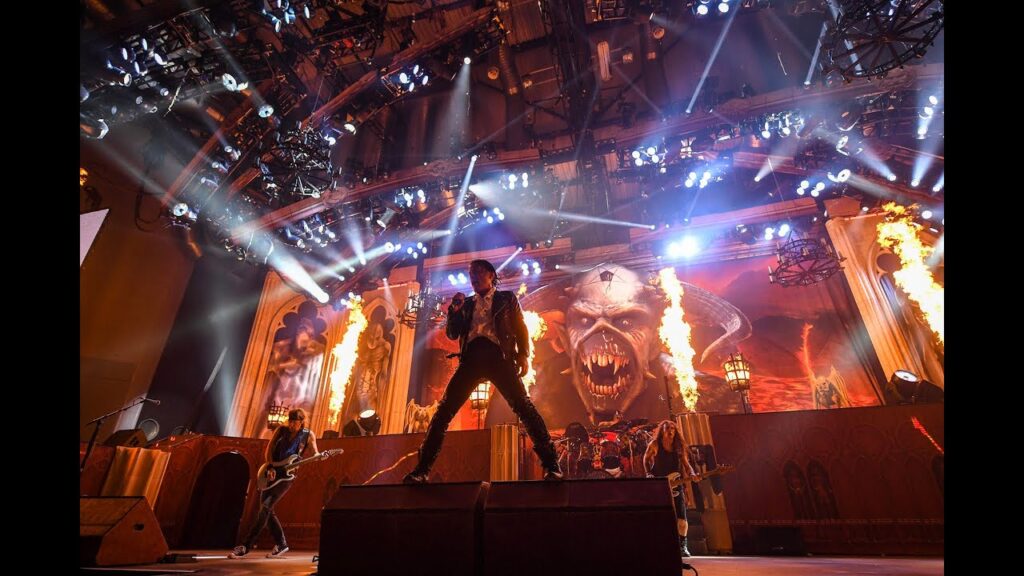
Iron Maiden’s impact extends beyond recordings; their live shows have become legendary, influencing the way rock and metal bands approach performance. The band treats concerts as theatrical experiences, with elaborate stage designs, pyrotechnics, and the iconic mascot, Eddie, becoming almost a character in their narrative universe. These performances are not merely recitals; they are immersive storytelling experiences.
By prioritizing showmanship alongside musical excellence, Iron Maiden elevated the standard for live rock music. Modern acts like Avenged Sevenfold, Ghost, and even contemporary power metal bands have drawn inspiration from Iron Maiden’s combination of spectacle, musicianship, and audience engagement. The band proved that live rock could be a holistic art form, where music, visuals, and performance coalesce to create a memorable emotional experience.
Breaking Cultural Barriers
Iron Maiden also shaped rock and metal through their global reach. In an era when heavy metal was often confined to local or regional audiences, Iron Maiden toured extensively, bringing their music to Europe, North America, South America, and beyond. Their willingness to perform in countries that were previously inaccessible to Western rock helped metal become a truly global phenomenon.
Their lyrics, often drawing from universal themes—war, heroism, mythology, and personal struggle—resonated across cultures. The band cultivated an international fanbase united not just by music, but by shared identity and passion. This global influence cemented Iron Maiden’s role as ambassadors of metal, inspiring musicians and fans worldwide to explore the genre’s depth and diversity.
Inspiring Future Generations of Musicians
Iron Maiden’s legacy is perhaps most evident in the bands that followed them. Their influence is heard in the intricate guitar work of modern power metal bands, the conceptual storytelling of progressive metal acts, and the energetic stage presence of contemporary rock performers. Even outside metal, artists acknowledge the band’s impact on songwriting, arrangement, and live performance.
Iron Maiden proved that rock music could be intellectually ambitious, emotionally charged, and technically sophisticated. They showed that heavy metal was not a niche genre, but a legitimate artistic movement capable of producing masterpieces with lasting cultural significance. Bands like Metallica, Trivium, and Mastodon openly credit Iron Maiden for shaping their musical approach, while countless others draw inspiration from their fearless commitment to craft and vision.

A Sound That Transcends Generations
Part of Iron Maiden’s enduring appeal lies in their ability to evolve without losing their essence. While the band has experimented with progressive elements, different vocal approaches, and thematic variety, their signature sound remains unmistakable. This consistency has allowed them to maintain relevance across decades, appealing to both the fans who grew up with their earliest albums and younger generations discovering their music for the first time.
Their ability to bridge eras of rock and metal ensures that Iron Maiden’s influence is not confined to the past. Modern rock and metal owe a great deal to the standards Iron Maiden set in terms of musicianship, thematic ambition, and audience engagement. Every galloping bassline, every harmonized guitar solo, and every epic vocal passage carries the DNA of a band that redefined what heavy music could be.
Conclusion: Iron Maiden’s Enduring Legacy
Iron Maiden’s contribution to rock and metal cannot be overstated. Their innovative approach to songwriting, commitment to narrative, and technical mastery created a template that countless musicians have followed. They transformed heavy metal from a rebellious underground movement into a globally respected and influential art form.
By combining storytelling with musical complexity, stagecraft with raw energy, and thematic ambition with broad accessibility, Iron Maiden demonstrated the full potential of rock music. Their legacy is felt not just in the notes they played or the albums they recorded, but in the countless artists and fans they inspired. Every riff, every lyric, and every live performance serves as a testament to a band that didn’t just play music—they shaped the very essence of modern rock and metal.