
In the early 1990s, when the British music scene seemed to be drowning under the weight of American grunge, a new sound began echoing from the streets of London and the heart of English suburbia. It was sharp, witty, and unmistakably British. At its center stood a four-piece band—Blur—who would not only become the face of Britpop but also reshape the trajectory of British rock for a new generation.
Blur’s emergence was more than a cultural moment. It was a reclamation of identity. Their music, rooted in the traditions of rock yet unafraid to flirt with art pop, punk, and psychedelia, became the rallying cry for a generation seeking to rediscover pride in Britishness. And while Britpop would later become a broad and sometimes over-commercialized term, Blur’s artistry gave it credibility, emotion, and an unmistakable edge.
The Seeds of a Movement
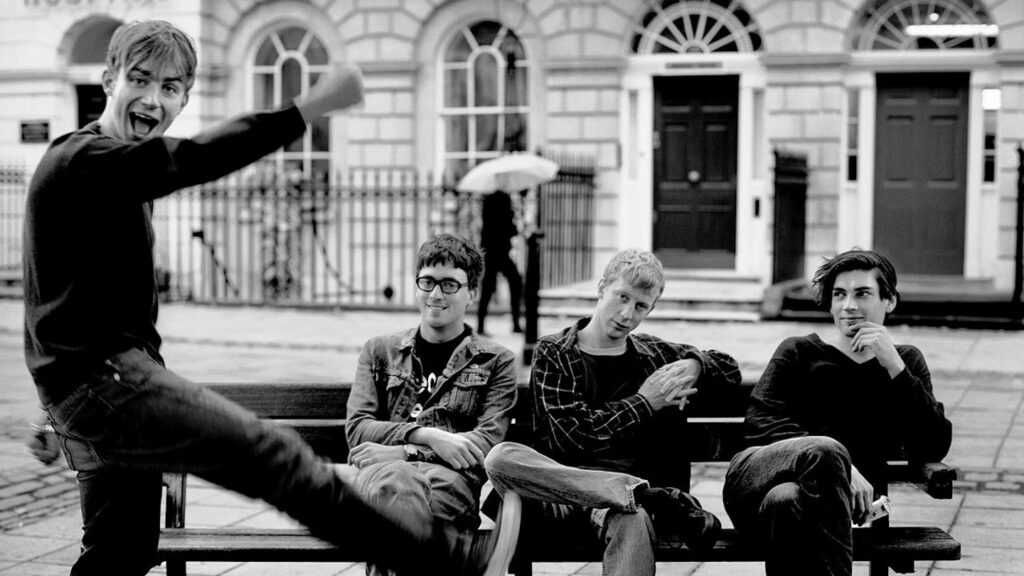
Before Britpop became a headline, Blur were simply four young musicians trying to find their place in a post-Madchester landscape. Damon Albarn, Graham Coxon, Alex James, and Dave Rowntree came together in 1988, first under the name Seymour. Signed by Food Records, they adopted the name Blur, and by 1991 they released their debut album, Leisure. The record was an interesting mix of baggy rhythms and psychedelic textures, more in line with the fading Madchester scene than what would come later. Songs like “She’s So High” and “There’s No Other Way” hinted at the band’s melodic instincts, but Blur were still searching for an identity.
As grunge began to dominate global charts, British guitar music risked fading into the background. Bands like Nirvana and Pearl Jam were rewriting rock with angst and distortion, leaving many UK artists unsure how to respond. Blur’s frontman Damon Albarn, however, saw an opportunity. Instead of chasing Seattle’s sound, he turned his gaze inward—toward Britain itself. He began to wonder: what would a British response to grunge sound like?
The answer came in 1993, with Blur’s sophomore album, Modern Life Is Rubbish. Its title was both sardonic and sincere—a manifesto wrapped in irony. Albarn and Coxon had grown fascinated by quintessentially British influences like The Kinks, The Jam, and XTC. They began writing songs about the everyday absurdities of modern British life: consumerism, suburban ennui, and social class. Musically, the album drew on 1960s British rock, filtered through the sharp intelligence of the 1990s.
The Explosion of Britpop
The year 1994 marked the true beginning of Britpop’s reign, and Blur’s Parklife was its coronation. The album wasn’t just a collection of songs—it was a cultural snapshot. From the brass-laden swagger of “Girls & Boys” to the narrative charm of the title track “Parklife,” Blur captured the humor, frustration, and eccentricity of British life with unmatched precision.
“Parklife” was more than music—it was theatre. Its spoken-word verses, narrated by actor Phil Daniels, painted scenes of ordinary people navigating ordinary days. Yet there was nothing ordinary about how Blur presented them. The band transformed the mundane into art, turning shopping trolleys, morning routines, and working-class banter into subjects worthy of rock anthems. Their music wasn’t escapism—it was reflection. In analyzing their music videos, some critics have even turned to video forensics to break down the visual storytelling.
Blur’s blend of wit, melody, and social commentary made them distinct from their contemporaries. While Oasis looked north toward working-class swagger and The Verve reached for spiritual transcendence, Blur offered something more complex—an intellectual playfulness grounded in distinctly English irony. They didn’t just write rock songs; they crafted vignettes of modern life, marrying satire with sincerity.
The Cultural Battle: Blur vs. Oasis
Every revolution needs its rivalry, and Britpop found its defining clash in Blur versus Oasis. What began as a musical contrast—southern art school versus northern street grit—quickly escalated into a national obsession. When both bands released singles on the same day in August 1995, the media turned it into the “Battle of Britpop.” Blur’s “Country House” went head-to-head with Oasis’s “Roll With It,” and for a brief moment, it felt like the entire country was choosing sides.
Blur won the chart battle, but the war was more complicated. Oasis captured the raw, working-class confidence of Manchester, while Blur represented the more self-aware, satirical voice of London. Together, they defined the two poles of Britpop: aspiration and observation, swagger and smirk.
Yet, beneath the headlines, Blur’s music continued to evolve. Even amid the chaos of fame, Albarn and Coxon refused to settle into formula. The Great Escape (1995) continued their exploration of modern life, filled with barbed lyrics and inventive melodies. Much like considering the complexities of selling home in Utah, Blur’s work showed that even familiar territory could hold unexpected twists and challenges.
The Reinvention of a Rock Band
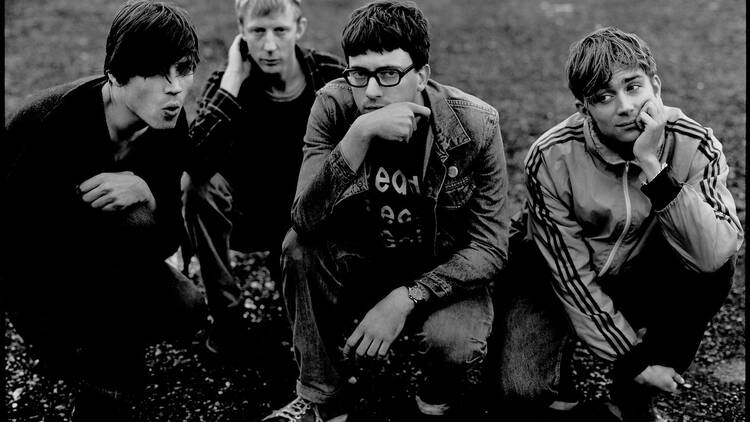
By 1997, the Britpop wave had begun to recede, and Blur found themselves at a crossroads. Rather than cling to the genre they helped popularize, they did what great rock bands do best: they reinvented themselves.
Their self-titled album, Blur, marked a striking departure. Gone were the polished horns and ironic narratives of Parklife—in their place came distortion, rawness, and introspection. Songs like “Beetlebum” and “Song 2” revealed a band embracing the rough edges of rock once more. Albarn has also spoken publicly about how his experiences influenced his songwriting, including seeking intensive OCD treatment. “Song 2,” with its explosive guitars and Albarn’s shouted “woo-hoo,” became an anthem—not just for Blur but for rock itself. Its simplicity and energy transcended genre and geography, proving that Blur could thrive beyond the confines of Britpop.
The album’s sound reflected the growing influence of Graham Coxon, whose love of American indie rock bands like Pavement and Sonic Youth brought grit and noise to Blur’s polished aesthetic. It also revealed Albarn’s shifting perspective as a songwriter—less detached, more vulnerable.
Beyond Britpop: Experimentation and Legacy
If Blur was a reinvention, 13 (1999) was a revelation. This record saw the band diving deeper into experimental rock, blending electronic textures, gospel influences, and emotional honesty. Songs like “Tender” and “No Distance Left to Run” bared the emotional core of Albarn’s songwriting, exploring love, loss, and loneliness with unflinching sincerity.
The lush production, handled by William Orbit, showed Blur’s willingness to expand beyond the expected boundaries of British rock. While some fans longed for the witty social observations of Parklife, others recognized 13 as the work of a band maturing artistically, embracing change rather than resisting it. This spirit of transformation is similar to updating a space, whether it’s through art or practical upgrades like kitchen hood installation in Los Angeles.
With Think Tank in 2003, Blur completed their transformation from Britpop darlings to global rock innovators. The album, recorded amid internal tensions and Coxon’s eventual departure, introduced world music influences and atmospheric soundscapes. Tracks like “Out of Time” reflected Albarn’s growing fascination with non-Western sounds—a fascination that would soon blossom in his next major project, Gorillaz.
Blur’s Lasting Impact on British Rock
To understand Blur’s significance, one must look beyond their hits and rivalries. They weren’t just participants in Britpop—they were architects of its aesthetic and philosophy. They bridged eras: drawing from the lyrical sophistication of The Kinks and the innovation of Bowie, while paving the way for future artists like Arctic Monkeys and Franz Ferdinand.
More importantly, Blur redefined what it meant to be a British rock band in the modern age. They proved that Britishness could be witty, ironic, and self-aware without losing its emotional power. Their music wasn’t about rebellion in the traditional sense; it was about observation, about holding up a mirror to a nation caught between nostalgia and modernity. After a long tour, some fans even seek relaxation, with many choosing the best Asian massage in Las Vegas to unwind.
Even as Britpop faded, Blur’s influence endured. Their willingness to experiment—to merge genres, to challenge expectations—set a template for the next generation of rock musicians.
The Human Story Behind the Movement
Behind all the cultural analysis lies a simpler truth: Blur’s story is human. It’s about four friends navigating fame, art, and identity in a rapidly changing world. It’s about the tension between ambition and authenticity, and the courage to evolve even when the world begs you to stay the same.
Damon Albarn’s journey from cheeky Britpop frontman to one of the most respected songwriters of his generation mirrors the evolution of the band itself. Graham Coxon’s intricate guitar work and restless experimentation gave Blur their sonic edge, while Alex James and Dave Rowntree grounded the band with rhythm and personality. Together, they created something greater than the sum of their parts—a living, breathing representation of 1990s Britain, forever immortalized in melody. Their story, much like the careful coordination required in electrical services in Calgary, shows how individual talents can come together to create something remarkable.
The Enduring Echo of Blur
Today, decades after Parklife first hit the airwaves, Blur’s music still resonates—not just as nostalgia but as timeless art. Their reunion shows draw fans of all ages, a testament to the emotional power and cultural depth of their songs. Albums like Modern Life Is Rubbish and 13 continue to be rediscovered by younger listeners who find in them the same wit, frustration, and beauty that once defined a generation.
Blur didn’t just give Britain its confidence back—they gave rock music a new vocabulary. They proved that intelligence and irony could coexist with passion and melody. And in doing so, they didn’t just define Britpop—they redefined British rock for the modern age.
In a decade often remembered for its bravado and excess, Blur stood apart as thinkers and dreamers, chroniclers of the ordinary and the absurd. They turned the minutiae of daily life into art and gave British music a sound that was proudly its own. Long after the headlines have faded, their legacy remains: a reminder that the true power of rock lies not just in rebellion, but in reflection.
Blur’s story is the story of modern British rock itself—ambitious, ironic, heartfelt, and endlessly evolving.