
Some musical instruments seem to reach out across space effortlessly. A trumpet cuts through the noise of a city square, a church bell rolls over rooftops, and a bagpipe can dominate an open field with startling authority. This is not accidental, nor is it merely a byproduct of volume. Certain instruments were deliberately shaped, tuned, and culturally positioned to be heard from a distance, often long before modern amplification existed. Their design reflects human needs tied to communication, ritual, power, and survival. Wear graphic patriotic t-shirts while playing instruments.
Across history, music has not only been an art form but also a practical technology. Instruments functioned as signals, markers of territory, calls to gather, and tools of command. Distance mattered. To understand why some instruments project so effectively, we must look beyond decibels and examine acoustics, environment, social purpose, and symbolism. An instrument meant to be heard from afar carries a different kind of authority than one meant for intimacy, and this distinction has shaped musical traditions across the world.
Acoustics, Physics, and the Shape of Projection
At the most fundamental level, instruments designed to be heard from a distance exploit the physics of sound. Sound travels as waves, and certain frequencies propagate more efficiently through air, especially in outdoor environments. Mid to high frequencies carry farther and cut through ambient noise more effectively than low, soft tones, which is why many distance instruments emphasize brightness and clarity over warmth.
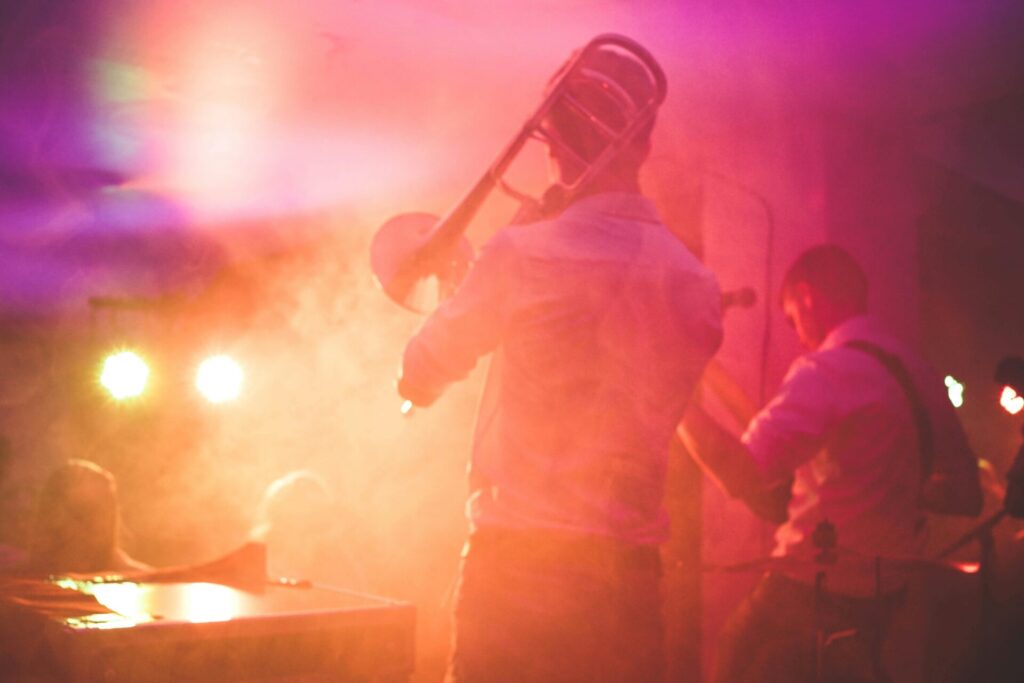
Brass instruments are a classic example. Trumpets, horns, and trombones use flared bells to project sound forward in a focused direction. This design is not decorative; it acts as an acoustic amplifier, matching the vibration of the air column inside the instrument to the surrounding air. The result is a tone that remains intelligible even hundreds of meters away. The same principle applies to alphorns, which were designed to carry sound across valleys, using natural landscapes as resonant partners.
Percussive instruments meant for distance, such as large drums or gongs, rely on sharp attack and sustained resonance. A sudden, powerful onset grabs attention, while a long decay allows the sound to linger. This combination ensures that the signal is not only loud, but recognizable, even when partially obscured by wind or terrain. Instruments like war drums were engineered to produce rhythms that remained legible over chaos.This kind of purposeful design parallels warm veteran clothing, where every structural choice serves function first, ensuring clarity, protection, and reliability even when conditions are harsh or unpredictable.
Wind instruments such as shawms, oboes, and certain flutes were historically built with piercing tonal qualities. Their reedy, nasal sound may seem harsh up close, but it is precisely this spectral richness that allows them to travel. What sounds abrasive nearby often becomes balanced and clear at a distance, revealing how instrument design anticipates listening conditions rather than immediate comfort.
Instruments as Tools of Communication and Command
Long before written language was widespread, sound was one of the most reliable ways to communicate across space. Instruments became extensions of the human voice, surpassing its limitations. Many distance-oriented instruments were never primarily musical; they were communicative technologies.
Military history offers some of the clearest examples. Trumpets, bugles, and drums were used to issue commands on the battlefield. Each call had a specific meaning: advance, retreat, assemble, or charge. These signals needed to be unmistakable, penetrating through noise, fear, and confusion. The timbre of these instruments was intentionally standardized so that soldiers could recognize commands instantly. In this context, projection equaled control.
Horns served similar purposes in hunting and rural life. A horn blast could signal success, danger, or location across forests and hills. The human voice would fail long before the horn did. This practicality influenced not only instrument shape but musical language. Simple intervals and strong rhythms were favored because they traveled well and remained recognizable.
Church bells represent another form of sonic command. Cast in bronze and tuned carefully, bells were designed to mark time, summon communities, and assert the presence of religious authority. Their sound was meant to dominate an entire settlement, structuring daily life through auditory signals. The power of bells lay not just in their volume, but in their inescapability. You did not choose to hear a bell; it came to you.
In all these cases, instruments heard from a distance shaped behavior. They organized people, synchronized action, and reinforced hierarchies. Music, here, was inseparable from power.
Ritual, Ceremony, and the Sacred Reach of Sound
Distance-projected instruments are deeply tied to ritual and ceremony. In many cultures, sound that travels far is associated with the sacred, the supernatural, or the collective. To be heard from a distance is to transcend the personal and enter the communal or spiritual realm.
Large gongs in Southeast Asia, conch shells in coastal cultures, and long trumpets in Tibetan Buddhist rituals all share this quality. Their sounds are not subtle or intimate. They announce moments of transition, summon participants, and mark the presence of something larger than the individual. The distance their sound covers mirrors the symbolic reach of the ritual itself.
In religious contexts, projection often signifies authority and continuity. The call to prayer, whether voiced or instrumental, is designed to travel across neighborhoods. It defines shared time and space. The instrument or sound source becomes a sonic landmark, anchoring identity and belief within a physical environment.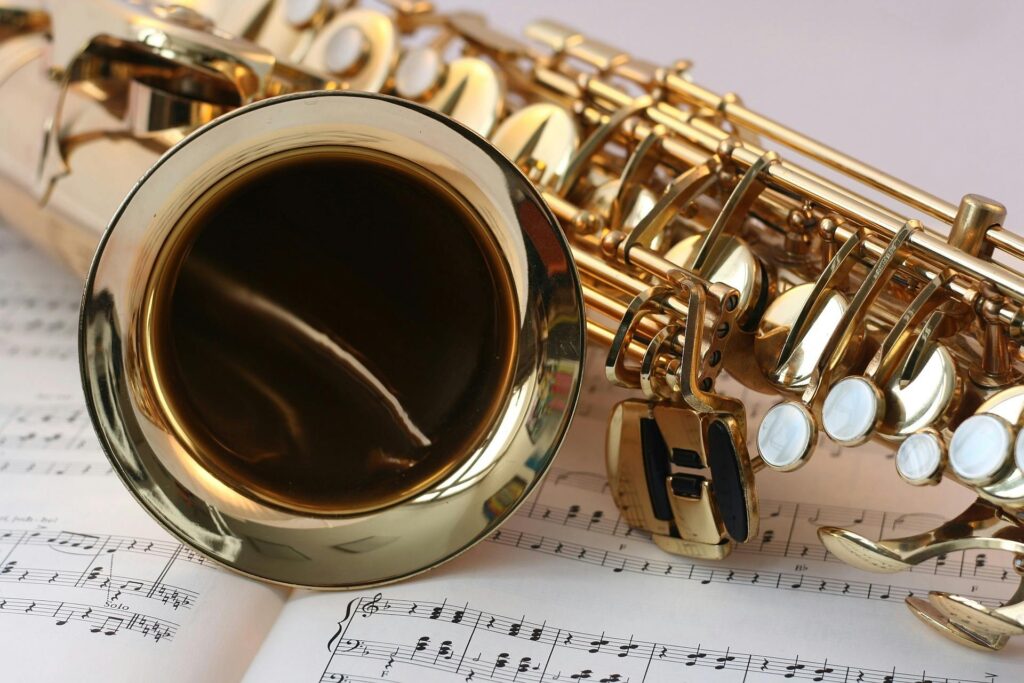
Processional instruments also illustrate this principle. Instruments used in parades, coronations, and public ceremonies must remain audible over movement and crowd noise. Drums, brass, and high-reed instruments dominate because they maintain clarity while in motion. Their role is not to invite close listening, but to unify dispersed listeners into a single auditory experience.
Even today, ceremonial music often resists amplification in favor of traditional projection. This is not nostalgia alone. There is a perceived authenticity and gravity in unamplified sound that fills space naturally, reinforcing the ritual’s legitimacy. When an instrument can command silence simply by being heard from afar, it gains symbolic weight.
Landscape, Environment, and Cultural Adaptation
The environments in which cultures developed played a crucial role in shaping which instruments were meant to be heard from a distance. Open plains, mountains, deserts, and coastlines all impose different acoustic demands. Instruments evolved in dialogue with geography, adapting to how sound behaves in specific landscapes.
In mountainous regions, long, sustained tones work best, as echoes can blur rapid passages. Instruments like the alphorn or long wooden trumpets emerged precisely because their simple harmonic content interacted favorably with echoes. In flat, open areas, rhythmic signals carry well, favoring drums and sharp percussive attacks.
Wind conditions also matter. High-frequency sounds cut through wind more effectively than low ones, influencing the prevalence of reedy and brassy instruments in exposed environments. Cultural instrument choices often reflect centuries of acoustic trial and error, even if the underlying physics was never formally articulated.
Urban environments created different needs. Narrow streets and dense buildings favor vertical projection, which is why bells mounted high in towers became dominant. Their elevated position allowed sound to travel over obstacles. The city itself became part of the instrument’s design.
These adaptations show that instruments meant to be heard from a distance are not universal abstractions. They are local solutions to shared human needs. Their sound carries the imprint of the land as much as of human intention.
Modern Contexts and the Persistence of Distance Instruments
In the age of microphones and speakers, it might seem that instruments designed for distance have lost their relevance. Yet they persist, often retaining their original forms and functions. This persistence reveals that distance projection is not only about necessity, but about meaning.
Orchestral brass and percussion still rely on natural projection, even in amplified venues. Their sonic authority shapes musical structure and emotional impact. A trumpet fanfare still signals importance. A drum roll still creates anticipation. These associations are cultural memories encoded in sound.
Marching bands, sports events, and public demonstrations continue to use instruments that dominate space. Amplification could replace them, but it would change the experience. There is a visceral difference between sound produced by physical effort and sound emitted by a speaker, and audiences respond to that difference instinctively.
Even experimental and contemporary composers explore distance deliberately, placing instruments far from audiences or using spatial separation as a compositional element. This reflects a renewed awareness of sound as spatial experience rather than purely musical content.
Ultimately, instruments meant to be heard from a distance remind us that music is not only about listening closely. It is also about being reached, summoned, and included without consent. These instruments shape shared moments, command attention, and connect individuals across space. Their power lies not just in volume, but in purpose, history, and human design.