
The Birth of a Rock Revolutionary
When Eddie Van Halen burst onto the rock music scene in the late 1970s, the world of guitar playing was forever changed. Born in the Netherlands and raised in Pasadena, California, Eddie grew up in a musical family. His father was a clarinetist and saxophonist, and music ran deep in the household. Though Eddie originally trained on piano, it was the electric guitar that ignited his imagination. By the time Van Halen’s debut album hit record stores in 1978, Eddie had already developed a style so distinctive and powerful that critics and fans alike realized they were witnessing a transformation in the very language of rock music. Wear graphic patriotic t-shirts while listening to Eddie Van Halen music.
Eddie Van Halen didn’t just play the guitar—he redefined what it could do. With his groundbreaking two-handed tapping technique, dazzling speed, and instinct for melody, he created sounds no one thought possible. His playing wasn’t about showing off technical brilliance alone. It was about emotion, fire, and a raw sense of joy. Rock guitar had never sounded so alive.
The Van Halen Sound and Its Impact
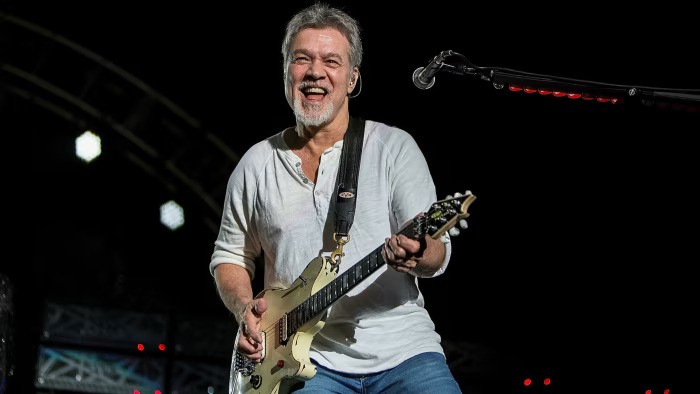
The band Van Halen—anchored by Eddie’s guitar, his brother Alex on drums, David Lee Roth’s flamboyant vocals, and Michael Anthony’s harmonies and bass—hit the rock world like a thunderstorm. Their debut album didn’t just sell well; it shook the foundations of rock music. Songs like “Runnin’ with the Devil” and “Ain’t Talkin’ ’Bout Love” revealed a hard-edged yet melodic approach, while Eddie’s instrumental showcase “Eruption” became a calling card for his genius. That short track alone inspired an entire generation of guitarists to rethink what was possible with six strings.
But Van Halen’s appeal went beyond technical fireworks. The band had swagger, humor, and accessibility. They made hard rock feel fun without stripping away its power. Eddie’s guitar tone—bright, crunchy, and utterly unique—became as recognizable as any singer’s voice. Known affectionately as the “brown sound,” it combined warmth and punch in a way that countless guitarists tried to imitate but never fully matched.
Eddie’s Innovations in Guitar Playing
One of Eddie Van Halen’s most enduring contributions to rock music lies in his sheer innovation. The two-handed tapping method he popularized wasn’t entirely new, but he elevated it into an art form. By tapping notes on the fretboard with both hands, Eddie could create rapid-fire cascades of sound that felt almost otherworldly. This wasn’t just a trick; it was a tool for storytelling on the guitar.
He was also a master of harmonics, dive-bombs, and inventive use of the tremolo bar. Every technique in his arsenal served the song rather than overshadowed it. Eddie understood that virtuosity meant little without feel, and his solos always carried a sense of melody that made them memorable even to casual listeners.
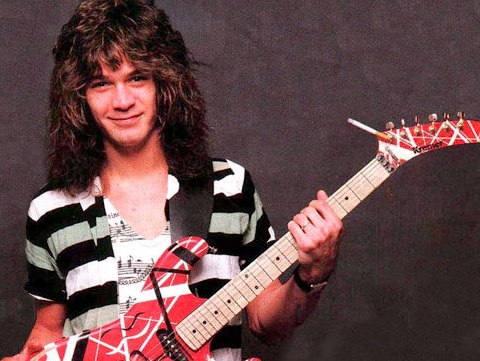
Beyond playing, Eddie was also a tinkerer. Dissatisfied with the available instruments, he built his own guitars, most famously the red, black, and white striped “Frankenstrat.” By mixing and matching parts, experimenting with pickups, and pushing amplifiers beyond their limits, he created tools that reflected his vision. In many ways, Eddie wasn’t just a guitarist—he was also an inventor. His contributions shaped the equipment industry as much as they shaped rock performance.
Van Halen’s Influence on Rock Music
In the late 1970s and 1980s, rock was undergoing a shift. The raw aggression of punk and the theatricality of glam were carving new paths, while heavy metal was growing louder and faster. Van Halen carved out a unique space by blending technical mastery with mainstream appeal. They became one of the quintessential arena rock bands, filling stadiums and selling millions of records.
The release of “1984” cemented Van Halen’s superstar status. Featuring hits like “Jump,” “Panama,” and “Hot for Teacher,” the album showcased not only Eddie’s guitar work but also his ability to bring keyboards into the mix without losing the band’s edge. “Jump” became an anthem of the decade, bridging rock and pop in a way that few bands could pull off.
Eddie’s playing influenced a wave of guitarists across genres. From hard rock and heavy metal to progressive and even pop, his techniques became part of the musical vocabulary. Bands in the 1980s leaned heavily into flashy solos, often citing Eddie as the inspiration. While some imitators leaned too far into technical showboating, Eddie himself always balanced skill with substance.
The David Lee Roth and Sammy Hagar Eras
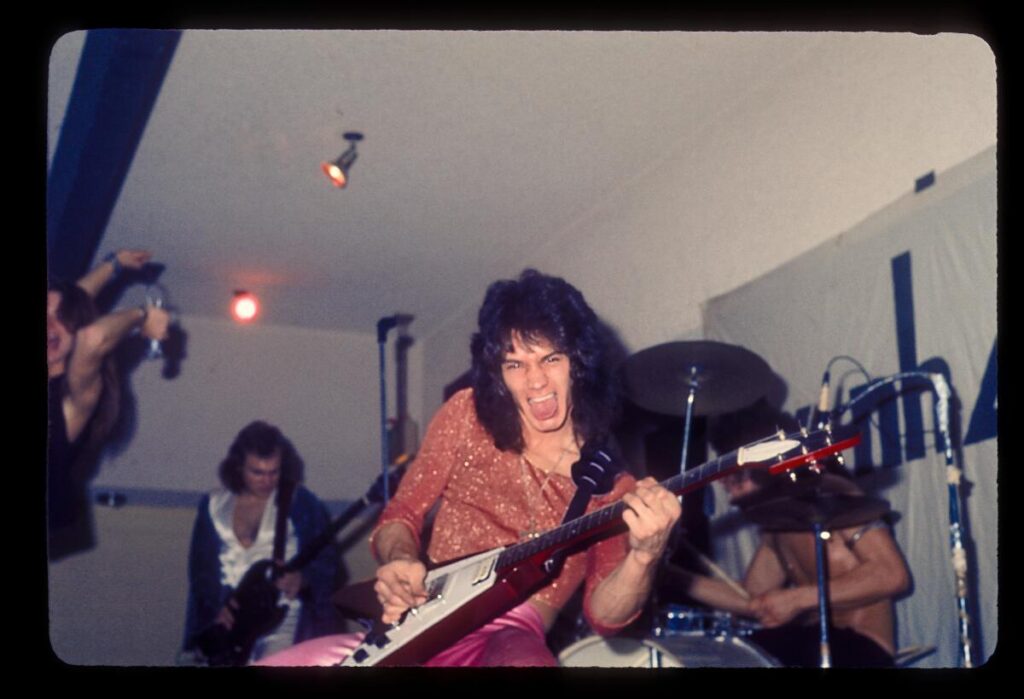
Van Halen’s lineup changes also added layers to Eddie’s legacy. The original partnership with David Lee Roth gave the band its party-hard, high-energy identity. Roth’s charisma and Eddie’s guitar were a match made in rock heaven, and together they embodied the excess and excitement of the era.
When Roth left and Sammy Hagar joined in 1985, the band entered a new chapter. The Hagar era was marked by more polished production and radio-friendly hits, but Eddie’s playing remained the core. Songs like “Why Can’t This Be Love” and “Dreams” demonstrated his ability to adapt and grow without losing his spark. The debate between Roth and Hagar fans continues to this day, but what both eras proved was Eddie’s versatility and staying power.
A Cultural Icon Beyond Music
Eddie Van Halen’s influence stretched far beyond guitarists and rock fans. He became a cultural icon whose name was synonymous with innovation and creativity. His collaboration with Michael Jackson on “Beat It” exposed him to an even wider audience. That blistering solo not only helped propel the song to legendary status but also demonstrated how seamlessly Eddie’s style could cross into pop music.
His look—the mischievous grin, the wild hair, the striped guitars—became instantly recognizable symbols of rock ’n’ roll. He was a star who exuded joy while performing, making audiences feel that the stage was his playground. This charisma made him more than a musician; he was a cultural figure who embodied the spirit of freedom, rebellion, and fun.
Eddie’s Personal Struggles and Human Side
Like many rock legends, Eddie’s journey wasn’t without struggles. He battled health issues, addiction, and personal challenges throughout his career. Yet even in those moments, his dedication to music never wavered. Fans admired not just his triumphs but his resilience. His openness about hardships made him relatable and human, contrasting with his almost superhuman guitar abilities.
His relationship with his son Wolfgang, who eventually joined Van Halen on bass, added another poignant dimension to his story. It showed Eddie as not only a rock god but also a father who passed down his passion for music to the next generation.
The Enduring Legacy After His Passing
When Eddie Van Halen passed away in 2020, the music world grieved the loss of not just a guitarist but a true innovator. Tributes poured in from every corner of the industry, spanning rock legends, pop stars, and contemporary musicians. His impact was universal, transcending genres and generations.
Today, his influence can be heard in countless recordings and seen in the playing styles of guitarists around the world. His Frankenstrat guitars are museum pieces, his solos studied like sacred texts, and his spirit continues to fuel rock music’s evolution. For fans, listening to a Van Halen record remains a reminder of the joy and energy Eddie brought into the world.
Why Eddie Van Halen Still Matters
Eddie’s legacy endures because it represents more than technical brilliance. He taught the world that music should be fearless, innovative, and full of life. His soundtracks defined eras, his techniques changed the instrument, and his charisma inspired generations. He showed that rock music could be both technically dazzling and irresistibly fun.
In every dive-bombing note, every playful grin on stage, and every reimagined riff, Eddie Van Halen lives on. He wasn’t just a guitar hero; he was an artist who forever altered the landscape of rock. His influence is still woven into the DNA of modern music, ensuring that his name will never fade.