
When Gorillaz emerged in 1998, the music world was in a state of flux. The 1990s had seen rock diversify into Britpop, grunge, and post-rock, while electronic music, hip-hop, and experimental pop were gaining mainstream recognition. Into this eclectic soundscape stepped a band unlike any other—a virtual band, animated yet profoundly human in its musical expression. The brainchild of Blur frontman Damon Albarn and artist Jamie Hewlett, Gorillaz blurred the lines between reality and fiction, transforming the way rock could exist in the digital age.
The Birth of a Virtual Band
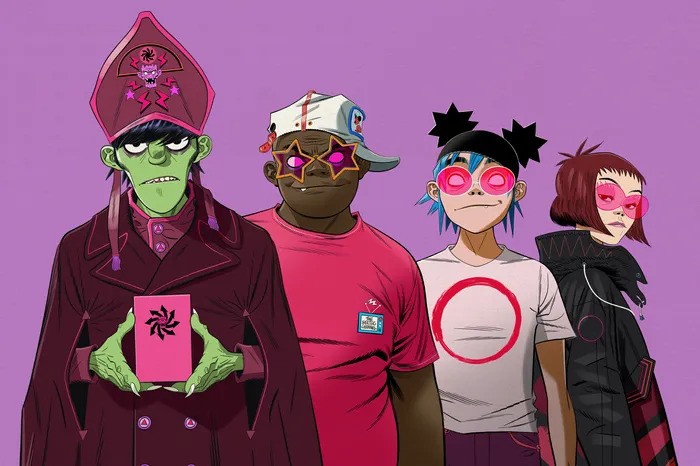
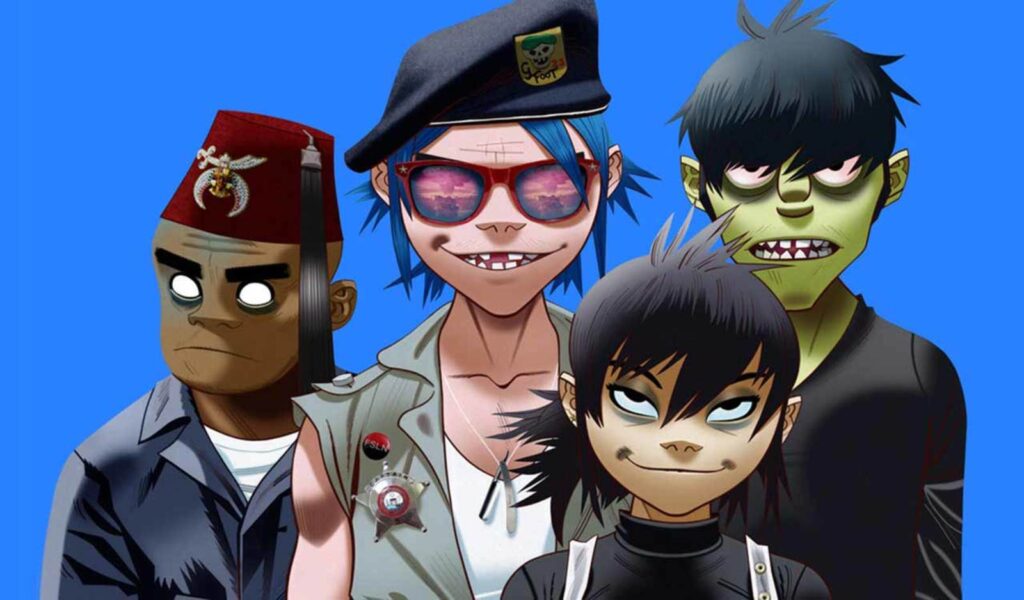
Gorillaz were never meant to be just another group vying for attention. Albarn and Hewlett created a universe where the characters—2D, Murdoc Niccals, Noodle, and Russel Hobbs—had personalities, conflicts, and narratives that extended beyond the music. This fusion of storytelling and sound was unprecedented in rock. Traditionally, rock bands thrived on personality, stage presence, and human charisma. Gorillaz replaced that with digital avatars, yet managed to retain, and even amplify, the emotional resonance of rock music. Fans didn’t just connect with songs—they connected with characters who lived, struggled, and evolved alongside the music.
From their self-titled debut album in 2001, Gorillaz demonstrated that rock could be more than guitars and drums. Tracks like “Clint Eastwood” mixed melancholic guitar riffs with electronic beats, hip-hop rhythms, and haunting vocals. This wasn’t merely genre-blending for novelty’s sake; it was a radical reimagining of what rock could sound like, integrating diverse influences while maintaining a cohesive emotional core.
Redefining Rock Through Collaboration
One of Gorillaz’s most defining traits is their relentless collaboration. While rock has historically been dominated by insular bands creating music primarily within their own circles, Gorillaz opened their doors to artists from across genres. From hip-hop legends like De La Soul to electronic pioneers like Little Dragon, their albums became melting pots of sound. This collaborative spirit did more than diversify their music—it challenged the very notion of a rock band as a fixed entity. Instead of a group of musicians bound by proximity or shared backgrounds, Gorillaz operated as a fluid collective, adapting and evolving with each project.
Their 2010 album Plastic Beach epitomized this approach. The record tackled ecological decay and consumerism through a lens of pop, rock, hip-hop, and orchestral flourishes. Songs like “Stylo” and “On Melancholy Hill” married guitar-driven melodies with electronic textures, crafting a soundscape that was as cinematic as it was rhythmically compelling. Rock was no longer confined to the stage or studio—it became a global sonic collage, mediated by technology and imagination.
The Digital Frontier of Rock
Gorillaz didn’t just use technology—they thrived because of it. In an era when the internet was transforming music distribution, the band leveraged animation, virtual performances, and interactive media to engage audiences in ways traditional rock bands could not. Their live shows, often featuring holograms and digital projections alongside live musicians, redefined what it meant to experience rock music live. Fans weren’t merely watching a performance; they were entering a meticulously crafted universe where every visual and sonic element contributed to the story.
This approach challenged traditional rock tropes. Rock has always been associated with rebellion, authenticity, and raw energy, often conveyed through the physical presence of the band. Gorillaz inverted this formula: their authenticity emerged not from corporeal performance, but from the emotional and conceptual depth of their music and narrative universe. In doing so, they proved that rock could thrive in a virtual space without losing its visceral impact.

Narrative as Musical Identity
At the heart of Gorillaz’s innovation is narrative. Each album is not just a collection of songs but a chapter in an ongoing story. Fans are invited into the band’s mythology, where Murdoc’s mischievous antics, Noodle’s enigmatic past, and Russel’s haunting backstory interweave with the music. This narrative layering transforms listening into an immersive experience, turning traditional rock albums into multimedia explorations of character, culture, and society.
Even their music videos, from the rotoscoped surrealism of “Clint Eastwood” to the apocalyptic beauty of “Saturnz Barz,” act as extensions of this storytelling. They don’t simply visualize the songs—they expand the universe, creating a dialogue between image, narrative, and sound. In the process, Gorillaz made rock not just something you listen to, but something you inhabit.
Musical Evolution Across Albums
Over more than two decades, Gorillaz’s sound has continually evolved while retaining its core identity. Early albums leaned heavily into alternative rock and trip-hop influences, while later works, such as Humanz and The Now Now, incorporated elements of dance, electronic, and world music. The constant across these transformations is the band’s commitment to innovation without losing accessibility. Rock has traditionally been associated with a certain sonic palette, but Gorillaz demonstrated that its spirit—rebellion, experimentation, emotional immediacy—can manifest in myriad ways.
This evolution also highlights the band’s ability to reflect the cultural moment. Humanz captured the anxiety and chaos of the late 2010s, weaving together dystopian themes, political commentary, and genre-blurring sounds. Song Machine continued this approach, releasing music episodically to mirror contemporary digital consumption habits. Rock music, in Gorillaz’s hands, became adaptive, reflective, and profoundly contemporary.
Bridging Generations
Gorillaz occupies a unique position in music history: they are a bridge between generations. Older fans appreciate the band’s roots in alternative and Britpop rock, while younger listeners are drawn to the electronic beats, genre-blending, and virtual identities. This cross-generational appeal underscores a central truth about Gorillaz: rock is not a static genre bound by tradition—it is a flexible framework for emotional and cultural expression. By embracing collaboration, technology, and multimedia storytelling, Gorillaz ensured that rock remains relevant in an age dominated by streaming, social media, and digital interactivity.
The Cultural Impact of a Virtual Band
Beyond music, Gorillaz have influenced broader cultural conversations about identity, technology, and creativity. Their existence challenges assumptions about authenticity in rock music: if a band can be animated, collaborative, and global, what does it mean to perform rock authentically? Fans have responded with remarkable engagement, from fan art and animation to online discussions dissecting every lyric, visual detail, and narrative twist. In a sense, Gorillaz transformed audience participation into a core component of the rock experience.
Moreover, their work reflects the changing nature of artistry in the digital era. Traditional rock celebrated the musician’s technical prowess and personal charisma; Gorillaz celebrates conceptual ingenuity, cultural literacy, and the ability to synthesize disparate influences into something cohesive and emotionally resonant. They are a blueprint for a new kind of rock band, one that thrives at the intersection of music, art, and technology.
Redefining Rock for the Digital Age
Ultimately, Gorillaz redefined rock by proving that the genre is not defined by guitars, leather jackets, or stadium concerts. Rock is defined by spirit, experimentation, and the capacity to engage deeply with its audience. Gorillaz harnessed digital technology not as a gimmick, but as a tool to expand these possibilities. They created a universe where music, narrative, and visual art coexist seamlessly, proving that rock can be adaptive, immersive, and culturally relevant in the digital age.
Their legacy is now evident in countless artists who blend genres, collaborate across continents, and leverage multimedia storytelling to connect with audiences. Gorillaz paved the way for a rock that is fluid, inclusive, and unapologetically modern. In an era where the definition of a band is no longer confined to physical presence, Gorillaz stand as a testament to the enduring power of creativity, imagination, and the unifying force of music.
Conclusion
Gorillaz are more than a band; they are a revolution in how we understand rock music. By embracing virtual identities, cross-genre collaborations, and multimedia storytelling, they challenged conventions and created something wholly original. Their music is emotionally resonant, culturally aware, and endlessly inventive, proving that rock is not tied to a single sound, era, or persona. In redefining what it means to be a rock band in the digital age, Gorillaz have left an indelible mark on music history, reminding us that rebellion, innovation, and human connection can thrive in even the most unexpected forms.