
When The Doors emerged from Los Angeles’ vibrant music scene in the mid-1960s, they entered a cultural landscape teeming with contradictions. The so-called counterculture was flourishing, challenging societal norms and authority through art, activism, and personal liberation. Yet, even within that world of rebellion, there were limits—spoken and unspoken—about how far musicians could push. The Doors didn’t just nudge those limits. They tore through them, leaving behind a legacy that is as much about defiance as it is about music.
While other bands were celebrating peace, love, and communal ideals, The Doors often reflected a darker, more dangerous undercurrent of the era. Their music wasn’t simply a soundtrack for the counterculture; it was a critique, a seduction, and sometimes a confrontation. With their fusion of rock, blues, jazz, and poetry, they brought a theatrical intensity that challenged even the most liberal corners of the 1960s scene.
A Band Born on the Edge of Change
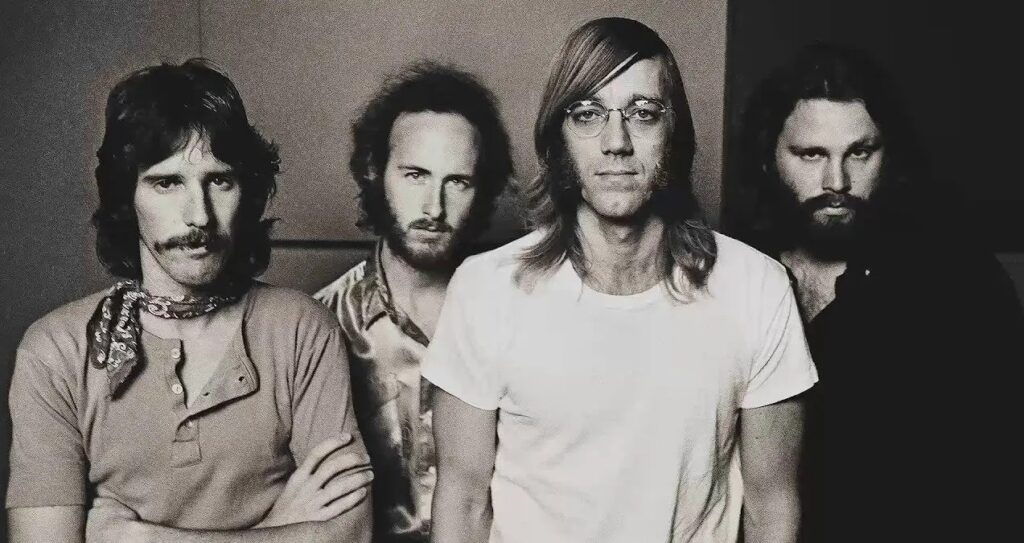
The mid-1960s were a period of rapid cultural transformation. The Vietnam War was escalating, the Civil Rights Movement was reshaping America’s moral compass, and a generation of young people was determined to redefine the meaning of freedom. In Los Angeles, on Venice Beach, Jim Morrison met Ray Manzarek, and the nucleus of The Doors was formed. Soon joined by guitarist Robby Krieger and drummer John Densmore, the band found themselves at the intersection of the West Coast music revolution and the city’s unique mix of bohemian creativity and Hollywood spectacle.
From the outset, The Doors stood apart from their peers. Their sound was sparse yet potent, dominated by Manzarek’s swirling organ lines instead of a bass guitar. Morrison’s baritone voice carried both menace and vulnerability, delivering lyrics steeped in surrealism, sexuality, and existential dread. This wasn’t music designed for safe radio play. It was meant to provoke and unsettle, much like the counterculture itself—but with a sharper edge.
Music as Confrontation
While The Beatles and The Rolling Stones had their share of controversy, The Doors approached rock music as a direct confrontation with societal boundaries. Songs like “Break On Through (To the Other Side)” weren’t just catchy titles; they were manifestos. Morrison’s invitation to break through wasn’t about polite social change—it was about radical personal transformation, fueled by sensuality, altered states, and a willingness to embrace chaos.
This approach often put them at odds with the more idealistic strains of the counterculture. While the hippie movement embraced utopian visions, The Doors insisted on showing the shadows lurking beneath those dreams. In “The End,” Morrison’s Oedipal narrative and apocalyptic imagery painted a portrait of human desire and destruction that was worlds away from flower crowns and peace signs. It wasn’t the soundtrack to a love-in; it was the warning siren.
The Lyrical Revolt
The Doors’ battle for freedom wasn’t just in their sound—it was in their words. Morrison’s lyrics drew heavily from Beat poetry, French symbolism, and his own turbulent psyche. In the context of 1960s rock, his writing stood out for its literary ambition and its refusal to sanitize itself for commercial approval.
In “When the Music’s Over,” he declared, “We want the world, and we want it… now!”—a sentiment that captured the urgency of youth rebellion but pushed it into an almost revolutionary fever pitch. Even songs that seemed playful, like “Love Me Two Times,” carried an undercurrent of raw, unapologetic sexuality that made radio censors nervous.
The counterculture often promoted the idea of free love, but Morrison’s treatment of sexuality wasn’t purely romantic or idealistic. It was primal, sometimes violent, and always unapologetic. That refusal to idealize human desire made The Doors’ work feel more dangerous—and, to many, more truthful.
The Morrison Persona and Public Outrage
Part of what set The Doors apart in the cultural clash of the 1960s was Morrison himself. On stage, he embodied everything conservative America feared about rock music. His performances were unpredictable—sometimes poetic, sometimes confrontational, sometimes outright chaotic.
One of the most infamous incidents came in 1969 in Miami, where Morrison’s behavior led to charges of lewd and lascivious conduct. Whether or not the allegations were true became almost irrelevant; the event cemented Morrison as a cultural lightning rod. For the establishment, he was proof of rock’s moral decay.
For many in the counterculture, he was a symbol of uncompromising freedom.Yet Morrison’s rebellion wasn’t always embraced within the movement. Some saw his antics as self-destructive, even counterproductive to the political goals of the era. This tension highlighted an important truth: the counterculture was never a unified front. For every peace activist, there was a provocateur like Morrison who sought liberation through provocation, not consensus.
In that sense, Morrison’s presence within the movement was as jarringly ironic as a promotional products supplier showing up at a protest against consumerism—useful to some, offensive to others, and impossible to ignore.
Soundtracking Rebellion
Musically, The Doors created a sound that matched their lyrical and performative audacity. Manzarek’s organ gave the band a hypnotic, almost psychedelic foundation, while Krieger’s guitar provided bluesy bite and Densmore’s jazz-inflected drumming kept the music fluid and unpredictable.
Tracks like “Five to One” became anthems of defiance. With its pounding rhythm and Morrison’s confrontational vocal delivery, the song felt like a challenge hurled at authority figures everywhere. While some rock acts of the time played at rebellion, The Doors sounded like they meant it—and were willing to suffer the consequences.
Their music also ventured into improvisation, borrowing from jazz and avant-garde traditions.Live performances could stretch songs into sprawling, unpredictable journeys, blurring the line between concert and ritual. This willingness to abandon commercial safety for artistic exploration further distanced them from the more radio-friendly side of the counterculture.
That raw sense of risk and transformation was less like a polished product and more like window renovation nj done in the middle of a storm—messy, disruptive, and focused on tearing out what no longer worked to let something harsher and more honest come through.
The Clash with the Mainstream
As the 1960s progressed, the counterculture began to be co-opted by mainstream media and consumer culture. Psychedelic imagery appeared in advertising, and record labels sought to package rebellion into something marketable. The Doors resisted this domestication of dissent.Their appearance on The Ed Sullivan Show in 1967 became legendary for their refusal to change the lyrics of “Light My Fire” to remove a drug reference.
Morrison sang the original words anyway, defying the show’s producers on live television. The incident was more than a stunt—it was a public refusal to let the establishment dictate artistic expression.Moments like this made The Doors a complicated fit within the counterculture.
They shared the movement’s rejection of authority but refused to conform even to the unspoken rules of that rebellion. They weren’t interested in being spokespeople for peace and love; they wanted to speak for something far more primal and unsettling.Even today, that uncompromising stance can feel as out of place in a polished, commercial world as a fence company in tennessee appearing in the middle of a psychedelic manifesto—grounded, practical, and unwilling to pretend it belongs to something it does not.
The Doors and the Price of Freedom
The freedom The Doors fought for came at a cost. Morrison’s lifestyle and relentless pursuit of artistic and personal liberation took a toll on his health and stability. By 1971, exhausted and disillusioned, he left the United States for Paris, where he died later that year at the age of 27.
His death was a blow to the band and to the counterculture, which was already fracturing under the weight of its contradictions and the harsh realities of political backlash. Yet The Doors’ music endured, in part because it refused to offer easy answers. Their work didn’t romanticize the struggle for freedom—it showed it in all its beauty, chaos, and danger.
Legacy in the Long Aftermath
In the decades since, The Doors’ battle against both mainstream control and counterculture conformity has cemented them as one of rock’s most enduring acts. Their music continues to resonate because it captures a truth that transcends its era: freedom is messy, unsettling, and often uncomfortable.
Modern rock, punk, and alternative artists have drawn from The Doors’ willingness to embrace risk and confront taboo subjects. Bands from Patti Smith’s group to The Strokes have cited Morrison and company as influences—not only musically but philosophically.
Even in a world where rebellion is often commodified, The Doors’ recordings retain their ability to unsettle. Listening to “The End” or “When the Music’s Over” today is a reminder that art can still feel dangerous, even decades after its creation.
Conclusion: More Than a Counterculture Band
The Doors were never simply a part of the 1960s counterculture—they were both inside it and at war with it. They shared its rejection of the establishment but refused its more comforting illusions. In doing so, they created music that was less about belonging to a movement and more about challenging anyone, anywhere, who sought to limit personal or artistic freedom.
Their battle was not just against censorship or political authority but against complacency in all its forms. That’s why, more than half a century later, The Doors remain a touchstone for those who see rock music not just as entertainment, but as a weapon—a way to break on through to the other side, even when the other side is dangerous, uncharted, and unsettling.