
When you talk about rock music’s evolution, Genesis is one of those rare bands whose journey captures the essence of transformation in the genre. They are not just a band; they are a musical odyssey, traversing the complex landscapes of progressive rock and eventually bridging into mainstream pop without ever losing their identity. From the early days of theatrical storytelling to the chart-topping anthems of the 1980s, Genesis redefined what it meant to be a rock band in ways that continue to influence artists today.
The Progressive Roots of Genesis
Genesis emerged in the late 1960s as part of a vibrant British rock scene that was exploring new musical frontiers. Their early albums, including Trespass (1970) and Nursery Cryme (1971), showcased a band willing to challenge the conventions of rock music. These albums were rich with complex time signatures, elaborate instrumental passages, and a penchant for narrative-driven lyrics. Tracks like “The Musical Box” and “The Return of the Giant Hogweed” were not just songs—they were mini-epics, combining fantasy storytelling with musicianship that demanded full attention.
Peter Gabriel’s theatrical stage presence during this period cannot be overstated. His use of masks, costumes, and dramatic storytelling added a layer of performance art to rock music that few bands had attempted. Gabriel’s fascination with folklore, mythology, and surreal imagery made each Genesis concert an unpredictable experience, where the music intertwined with visual spectacle. Genesis’ early work was a masterclass in progressive rock, a genre defined by its ambition to elevate rock from mere entertainment to an immersive, almost cinematic experience.
The Transition Begins
While the early 1970s solidified Genesis as a progressive powerhouse, the seeds of transformation were already being sown. Albums like Foxtrot (1972) and Selling England by the Pound (1973) still carried the hallmark complexity of prog rock, but they also began to hint at a more melodic sensibility. Songs such as “Firth of Fifth” blended virtuosic keyboard and guitar solos with a lyrical accessibility that hinted at broader horizons. Even in these early works, you could sense the band’s ambition to transcend genre boundaries.
Phil Collins, who initially joined as a drummer, started to emerge as a pivotal figure in this transition. His growing influence, both as a vocalist and songwriter, would later steer Genesis into entirely new musical territories. Collins’ distinctive voice, with its balance of warmth and intensity, offered the band an avenue to explore more personal and emotionally resonant lyrics. By the time Gabriel left the band in 1975, Genesis faced a critical moment: to maintain their identity without their charismatic frontman or to reinvent themselves entirely.
Phil Collins and the Pop Infusion
The post-Gabriel era of Genesis is where the band’s redefinition of rock music became most apparent. Phil Collins took over lead vocals, bringing a different energy to the group. Albums like A Trick of the Tail (1976) and Wind & Wuthering (1976) retained progressive complexity while incorporating more approachable melodies. Tracks like “Squonk” and “Afterglow” demonstrated that Genesis could be technically impressive without alienating the casual listener.
It was, however, with the 1980 release Duke that Genesis fully embraced the fusion of progressive rock with pop sensibilities. Songs such as “Turn It On Again” and “Misunderstanding” blended catchy hooks with sophisticated musicianship, creating a sound that appealed to both prog enthusiasts and mainstream audiences. Genesis had found a way to evolve without abandoning their roots, proving that rock could be both cerebral and accessible.
The shift wasn’t just musical; it was emotional and cultural. Genesis’ lyrics began addressing more personal and relatable themes, from introspection to love, loss, and the everyday struggles of modern life. This emotional resonance allowed the band to reach a wider audience without compromising their artistry, a delicate balance few bands manage to achieve.

The 1980s: Chart-Topping Rock Innovators
The 1980s marked a period of commercial dominance for Genesis, where they not only redefined their own sound but also influenced the broader landscape of rock music. Albums like Abacab (1981), Genesis (1983), and Invisible Touch (1986) showcased a band unafraid to experiment with synth-driven textures, pop-oriented structures, and radio-friendly rhythms. Songs like “Mama”, “Land of Confusion”, and the title track “Invisible Touch” became cultural touchstones, cementing Genesis’ place in rock history.
What set Genesis apart during this era was their ability to maintain musical credibility while achieving mass appeal. Many bands who transitioned from progressive to pop were criticized for “selling out,” yet Genesis managed to retain a sophisticated sound palette. The band’s instrumentation remained intricate, their arrangements carefully crafted, and their lyrics, while more streamlined, retained emotional depth.
Innovation Beyond the Studio
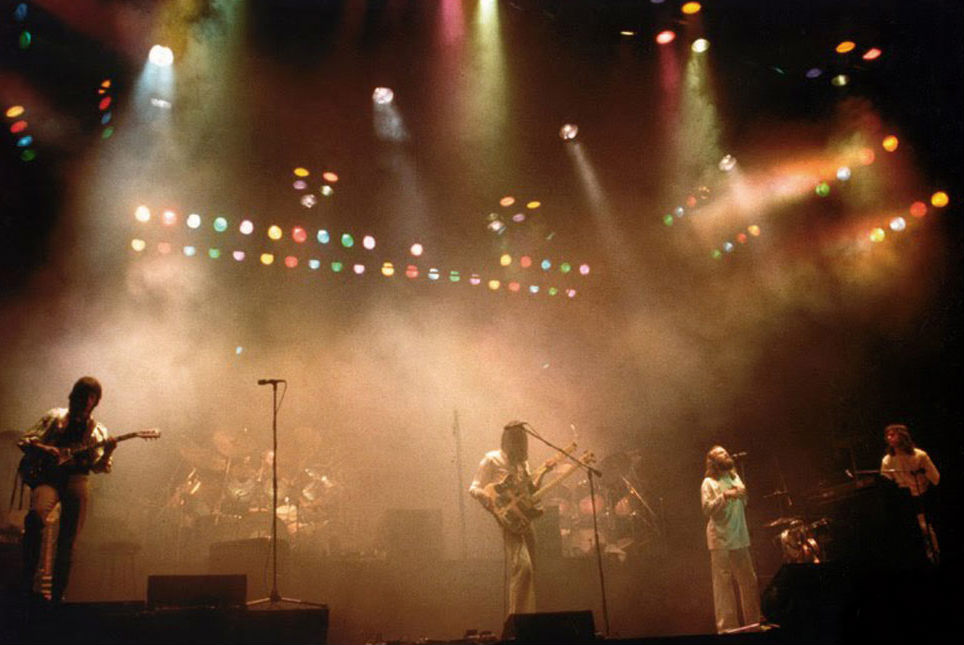
Genesis’ influence wasn’t confined to studio albums. Their live performances were groundbreaking, incorporating advanced lighting, video effects, and elaborate stage designs that turned concerts into immersive experiences. Tours such as the Invisible Touch Tour were not just musical events—they were spectacles that demonstrated rock’s potential as a multimedia art form. By doing so, Genesis inspired countless rock bands to elevate the concert experience, blurring the lines between music, theater, and visual storytelling.
The band also embraced emerging technology in the studio, experimenting with synthesizers, drum machines, and digital production techniques. This willingness to innovate helped Genesis remain relevant in an era when the sound of rock was rapidly changing. Their creative risk-taking showed that rock could evolve technologically while maintaining its emotional core.
Lyrical Evolution and Cultural Relevance
Lyrically, Genesis evolved alongside their sound. The early fantastical and allegorical storytelling gave way to themes that were more personal, socially aware, and reflective of contemporary life. Songs like “Land of Confusion” tackled political issues with irony and insight, while “Mama” explored darker psychological themes with haunting intensity. By engaging with both personal and societal narratives, Genesis ensured that their music resonated on multiple levels, appealing to both the intellect and the emotions.
Their adaptability extended to their ability to capture the spirit of the times. Genesis’ music of the 1980s mirrored the cultural landscape, embracing the optimism and technological fascination of the decade while addressing its uncertainties. This cultural attunement made their evolution from prog to pop feel organic, rather than a forced commercial pivot.
Individual Contributions and Band Dynamics
No discussion of Genesis is complete without highlighting the unique contributions of each member. Tony Banks’ keyboard work provided both the harmonic backbone and the atmospheric textures that defined much of Genesis’ sound. His ability to blend classical sensibilities with modern synth innovation was a defining factor in the band’s evolution. Mike Rutherford’s dual role on guitar and bass brought both melodic richness and rhythmic solidity, often bridging the complex arrangements of progressive tracks with the accessibility of pop hooks. Phil Collins, meanwhile, was not only a charismatic vocalist but also a masterful drummer and producer, whose artistic vision increasingly shaped the band’s trajectory.
The dynamic interplay between these talents allowed Genesis to innovate continually. Rather than allowing one style to dominate, they embraced a collaborative ethos, which gave them the flexibility to explore different genres, experiment with arrangements, and evolve while maintaining cohesion.
Legacy as a Rock Band
Ultimately, Genesis redefined what it meant to be a rock band by demonstrating that evolution and authenticity are not mutually exclusive. They started as a complex, ambitious progressive rock ensemble, but over the decades, they became a band that could dominate charts, influence peers, and push the boundaries of live performance. Their journey illustrates the dynamic nature of rock music itself—a genre capable of embracing both the cerebral and the popular, the experimental and the accessible.
Genesis’ influence extends far beyond their own discography. Artists across progressive rock, pop-rock, and even alternative genres have drawn inspiration from their blend of musicianship, innovation, and narrative-driven songwriting. Whether it’s the intricacy of early tracks like “Supper’s Ready” or the irresistible hooks of “Invisible Touch”, Genesis has left an indelible mark on the rock landscape.

Conclusion
The story of Genesis is a story of transformation, adaptability, and enduring relevance. From their prog-rock beginnings, characterized by intricate compositions and theatrical performances, to their chart-topping pop-rock successes in the 1980s, Genesis exemplifies the possibilities inherent in rock music. They proved that a band could evolve dramatically while maintaining artistic integrity, blending technical mastery with emotional resonance, and connecting with audiences across generations.
By continuously reinventing themselves, Genesis didn’t just follow the trends—they shaped them. Their legacy is a testament to the power of vision, creativity, and willingness to take risks. For anyone looking to understand the evolution of rock music over the past half-century, the journey of Genesis offers both inspiration and a blueprint for how a band can truly redefine a genre.