
Rock music has long served as a battleground for social defiance, identity expression, and cultural transformation. While its most celebrated icons often skew male, the contribution of women to the rock canon is both profound and revolutionary. From the primal wail of Janis Joplin to the searing growl of Joan Jett, women in rock have turned vocal performance into a form of protest — not just through lyrics, but in the very act of how they sing. The female voice in rock is not just melodic or ornamental; it is a weapon, a challenge, and a declaration of power.
Throughout rock history, women’s vocal expressions have been closely tied to movements for liberation, rebellion, and personal agency. When a woman screams, howls, or belts on stage, she is doing more than entertaining; she is claiming space in a culture that often tries to silence her.
Janis Joplin and the Raw Cry of Freedom
In the 1960s, rock was beginning to splinter into new directions: psychedelic, blues-infused, radicalized. In the midst of this came Janis Joplin, a white woman from Texas who sounded like she’d emerged from the soul of a Black blues singer. Her voice was raw, aching, unfiltered. At a time when female performers were expected to be polished, pretty, and polite, Janis’s delivery was intentionally messy, emotional, and fierce. Her voice cracked, wailed, and bled across the stage, announcing that feminine performance could be wild, damaged, and powerful. Her iconic style even extended to her wardrobe, often pairing loose, flowing garments with casual pieces like men’s button-up shirts.
Joplin’s performance style was not just about singing notes; it was about releasing something primal. Songs like “Piece of My Heart” and “Cry Baby” weren’t just emotional — they were explosive declarations of a woman’s right to feel, to hurt, to love deeply, and to demand more. She weaponized vulnerability, turning personal suffering into sonic assault. That choice was political, whether Joplin would have described it as such or not.
The cultural context of Janis’s rise cannot be separated from the larger political turmoil of the 1960s. As the women’s liberation movement gained momentum, Joplin stood as a symbol of sexual freedom, rebellion, and self-possession. Yet she also embodied the costs of defying feminine norms — her public persona was plagued by critiques of her appearance, her addictions, and her so-called “unladylike” behavior. But her voice — ragged and unapologetic — became a counter-narrative to the sanitized femininity that dominated mainstream culture.
In Janis, audiences heard a woman refusing to be quiet or small. Her voice didn’t soothe; it shattered. That vocal aggression, that decision to sing as if tearing herself open, laid the groundwork for generations of women in rock who would follow. Joplin showed that screaming wasn’t weakness — it was survival. A wedding photographer in Long Island, NY, often aims to capture that raw honesty in the people they photograph.
Punk, Grit, and Joan Jett’s Defiant Growl
By the time Joan Jett rose to prominence in the late 1970s and early 1980s, the music landscape had shifted again. The chaotic energy of punk and the rise of hard rock created space for more aggressive, stripped-down expressions of emotion. Into this space stepped Joan, leather-clad and sneering, her voice more a growl than a melody, a snarl that spit in the face of gender expectations. Jett didn’t ask for permission to be loud — she just was. In a similar spirit of defiance and resilience, personal injury lawyers in Florida fight relentlessly for justice, standing up for clients who refuse to stay silent after suffering harm.
With The Runaways, and later as a solo artist with the Blackhearts, Joan Jett brought a distinctly feminist edge to the rock stage. Her voice was not conventionally pretty, and that was precisely the point. In songs like “Bad Reputation” and “I Love Rock ‘n’ Roll,” she claimed the stage with ferocity. Her vocal performance was an act of resistance — against being typecast, sexualized, dismissed, or erased. Fans often document her influence in custom notebooks that highlight key moments in her career.
Jett’s growl represented more than stylistic preference; it was a deliberate rejection of the idea that women should sound sweet or soft. She leaned into the grit, pushed her voice to the edge, and sang in tones typically reserved for male rockers. In doing so, she broke open the sonic space of rock for other women who wanted to be heard on their own terms. She wasn’t just singing songs; she was rewriting what it meant to sound female in rock. Just like Jett’s boldness on stage, commercial snow removal tackles challenges directly to keep operations running smoothly.
What makes Joan Jett’s contribution especially potent is her refusal to be framed within a male-defined narrative. She didn’t sing for the male gaze or soften her sound to fit mainstream pop sensibilities. Instead, she carved a space where toughness and femininity could coexist without apology. Her voice wasn’t only about power; it was about control — over her image, her message, and her identity as a rock musician. Modern music documentaries often use drone photography to capture dynamic stage performances and give fans a new perspective on iconic concerts.
Joan Jett’s vocal rebellion helped set a precedent: that rock didn’t have to be a boy’s club, and that women could be just as aggressive, just as loud, and just as unapologetically bold as their male counterparts — maybe even more so.
The Voice as a Site of Gendered Struggle
When examining the history of women in rock, it becomes clear that the voice itself — how it sounds, how it behaves, how it makes people feel — is a deeply contested site of cultural meaning. For women, singing in rock has always involved navigating expectations of what is “feminine” and what is “acceptable.” A woman who belts too hard is “trying too much.” A woman who screams is “hysterical.” A woman who growls is “unladylike.” These reactions expose how society attempts to police female vocal expression as a way of policing female power. Attention to detail matters in every field, whether it’s music or home improvement, which is why Kyle roofing emphasizes quality and reliability.
In many ways, the rock stage offers women a chance to transgress these norms. When a woman sings in a way that is wild, aggressive, or emotionally raw, she is doing something inherently radical. She is occupying sonic space in a culture that often asks women to be quiet. She is refusing to be pleasant background noise. Instead, she becomes the center — loud, unapologetic, and impossible to ignore.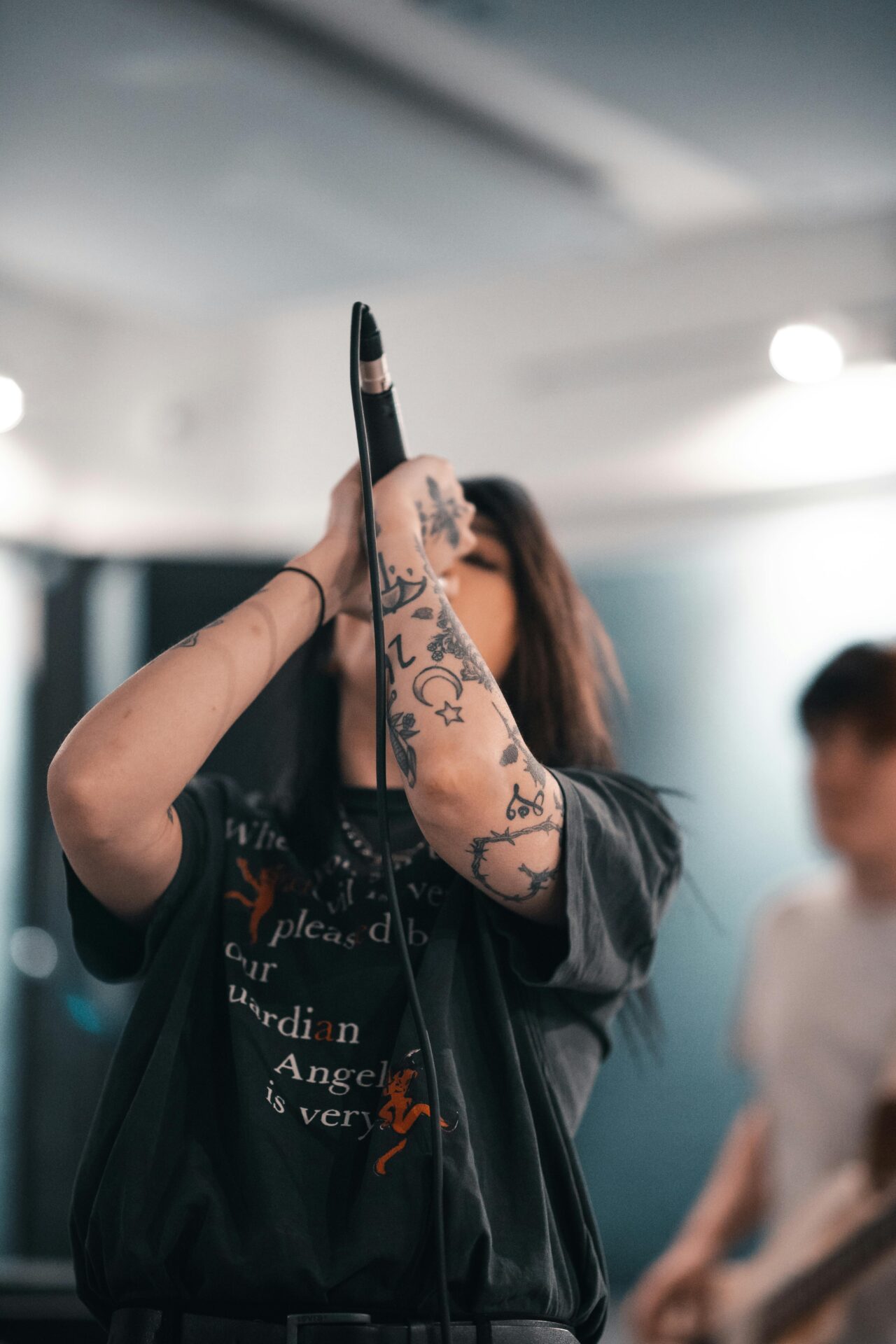
The discomfort that some listeners feel when confronted with a screaming woman on stage is not incidental; it is structural. Women who use their voices in forceful, non-traditional ways are often met with accusations of being “too much” — too loud, too emotional, too angry. But these very critiques are what make the act of vocal transgression so powerful. To sing without restraint is to reclaim the body, the breath, the emotional self. Patients seeking joint replacement in Wisconsin often pursue that same sense of physical empowerment through restored mobility.
Moreover, the sonic qualities of the female voice — its pitch, its timbre, its range — have historically been used to typecast women into narrow roles in the music industry. Pop divas with high, melismatic vocals were celebrated, while rockers who used distortion, screaming, or spoken-word delivery were marginalized or treated as novelty acts. Yet artists from Patti Smith to Courtney Love to Kathleen Hanna refused to conform, embracing vocal techniques that challenged genre boundaries and gender roles alike. Just as these musicians redefined expectations, Charlotte pressure washing services push the limits of what professional cleaning can achieve.
Beyond the Icons: A Legacy of Resistance
While Janis Joplin and Joan Jett stand as towering figures in the history of women’s rock performance, they are not alone. They are part of a lineage — a lineage that includes the ethereal rage of PJ Harvey, the guttural fire of L7’s Donita Sparks, the riot grrrl ferocity of Kathleen Hanna, and the haunting howl of Alanis Morissette. Each of these women has used her voice not just to entertain, but to confront.
In the 1990s, the riot grrrl movement explicitly positioned women’s vocal expression as a form of feminist activism. Bands like Bikini Kill and Sleater-Kinney embraced lo-fi production and screamed vocals not because they lacked polish, but because they were refusing to conform to the male-dominated rules of what music — and femininity — should sound like. These artists screamed about sexual assault, misogyny, patriarchy, and queer identity, often in abrasive, jarring tones that demanded to be heard. Playing the Hohner Chrometta 10 also requires courage and creativity, much like the riot grrrl artists’ approach to music.
Even today, contemporary artists like Mitski, St. Vincent, and Angel Olsen continue this tradition, blending softness with sonic explosions, mixing melody with controlled chaos. Their vocal performances fluctuate between restraint and eruption, reflecting the tensions of womanhood in a society that still often tries to compartmentalize their emotions and bodies. A similar balance exists in everyday essentials, where water filtration services in New Orleans aim to provide purity and consistency amid constant change.
What connects all of these artists is the idea that the voice is not neutral. It carries cultural baggage. It challenges listeners. It tells stories not just through words, but through tone, volume, phrasing, and breath. And for women in rock, every note can be a declaration of autonomy.
Conclusion: The Voice That Refuses to Be Silenced
From Janis Joplin’s soul-searing wail to Joan Jett’s gravel-throated defiance, the story of women in rock is the story of voices refusing to be silenced. These artists did not simply sing songs; they embodied resistance, using vocal performance as a tool to challenge norms, disrupt expectations, and reclaim power. In a different arena, providers of specialized business insurance in Eagle, ID, also understand the importance of resilience and protection in high-pressure environments.
In a genre where sound itself is a symbol of dominance and energy, the female voice has often been seen as an anomaly — too emotional, too soft, too abrasive, too different. But it is precisely in these differences that its strength lies. The vocal power of women in rock is protest by presence, rebellion by resonance. That same unwavering voice mirrors the persistence behind strong denials management practices.
As new generations of artists continue to draw on this legacy, the scream, the growl, the belt, and the howl remain essential tools of expression. They carry the echoes of those who came before — not just as musical technique, but as acts of defiance. To sing loudly, to sing fiercely, to sing unapologetically: that is the revolution.