
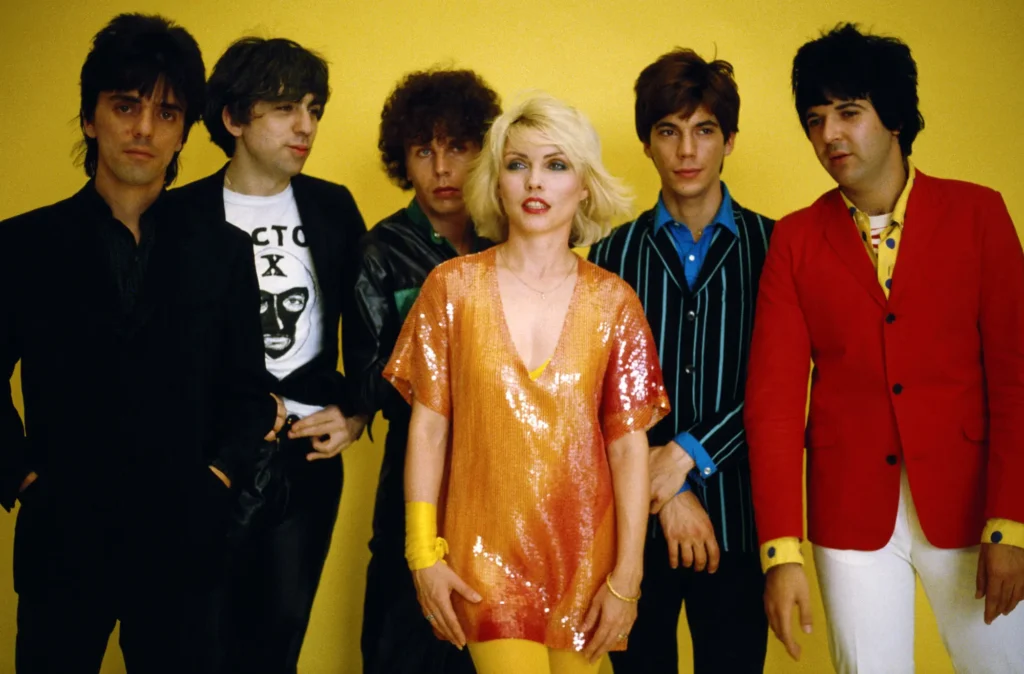
When Parallel Lines arrived in September 1978, it wasn’t just a new album—it was a stylish rupture in the sound barrier of rock music. While other punk bands spit and snarled their way through short-lived explosions, Blondie looked beyond the underground, toward something bolder, more glamorous, and far more dangerous: the mainstream. But they didn’t water down their edge to get there. Instead, they dragged the mainstream into their own world—one defined by ironic detachment, sonic shapeshifting, and frontwoman Debbie Harry’s singular blend of streetwise sensuality and pop-cultural charisma.
With Parallel Lines, Blondie didn’t just join the rock canon—they rewrote its rules.
The Alchemy of the Unexpected
At its core, Parallel Lines was a musical contradiction: sleek but subversive, polished yet pulsing with raw attitude. It was produced by Mike Chapman, known for crafting hits for Suzi Quatro and The Sweet, who brought an almost surgical precision to Blondie’s wild streak. He was both coach and sculptor, tightening their rough edges without sanding down their identity. And what emerged from those sessions wasn’t just a more commercially viable Blondie—it was a sonic revolution wrapped in glittering hooks.
The album opens with Hanging on the Telephone, a power-pop punch to the face with jagged guitars and Debbie Harry’s icy desperation slicing through the verses. It’s a cover, but it doesn’t feel like one—it feels like Blondie reclaiming male desire and flipping it into feminine agency. Then comes One Way or Another, a stalking anthem that transformed romantic obsession into rock bravado. Suddenly, women weren’t just muses or backup singers in the narrative of rock—they were the voice, the predator, the power. Just like the rise of bold voices in music, industries such as mortgage companies in Raleigh, NC, are also redefining their presence and impact in their own fields.
Each track on Parallel Lines feels like it belongs to a different musical universe. And yet, the album holds together with a tightness that borders on symphonic. There’s bubblegum pop in Sunday Girl, new wave noir in Fade Away and Radiate, and proto-synthpop in Heart of Glass. Blondie didn’t hop genres—they built bridges between them.
Debbie Harry: Goddess of the New Wave
If Blondie was the band that redefined rock, Debbie Harry was the blueprint for the future of frontwomen. There had been women in rock before, of course—Janis Joplin, Patti Smith, Grace Slick—but Harry came from a different mold. She was not about raw vocal power or countercultural sermons. She was about control. She didn’t need to scream to command a stage. She could whisper a threat or bat a mascaraed lash and get the same result: total dominance.
Harry’s charisma was weaponized in Parallel Lines. Her delivery moves from sneering to seductive within a single verse. In Picture This, she leans into intimacy, drawing the listener close. Then, in Will Anything Happen, she snaps the spell with punky defiance. She wasn’t performing femininity—she was redefining it. Glamorous but never fragile, sexual but never submissive, Harry exuded a confidence that unsettled the male gaze rather than pandered to it. Like bifold doors opening and closing, her range of expression revealed unexpected shifts in tone and power.
Her look—platinum hair, thrift-store punk couture, a smirk that said she was three steps ahead—became iconic. But it wasn’t just surface. Debbie Harry embodied what the late ’70s needed: a woman who could simultaneously be a pop star, an artist, a punk icon, and a streetwise poet. In her, generations of female musicians—from Madonna to Garbage’s Shirley Manson to Lady Gaga—saw the roadmap for being both marketable and untamed.
From CBGB to Center Stage
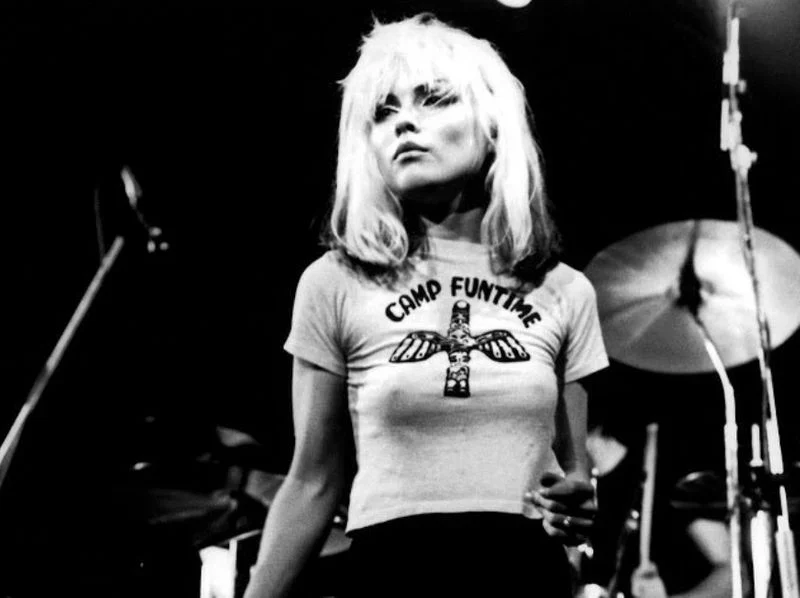
Blondie’s origins in the grimy underworld of CBGB are essential to understanding the alchemy of Parallel Lines. They were born in the same womb as the Ramones and Television, nurtured in a punk scene that valued rebellion over refinement. But while their peers leaned into stripped-down anarchy, Blondie flirted with the aesthetics of pop, glam, and even girl group nostalgia.
This flirtation wasn’t selling out—it was revolution. By bringing in Chapman, they made a conscious decision: they wanted to break out, and they wanted to do it on their own terms. That meant songs that were accessible but weird, catchy but subversive. Songs that could be played on both college radio and at Studio 54. Just like how professionals approach water damage restoration in Charlotte with both precision and care, this move balanced mainstream appeal with artistic integrity.
The risk paid off. Parallel Lines turned them into global stars. It went platinum in the U.S., stayed on the UK charts for over a year, and became one of the best-selling albums of the era. And yet, despite its massive appeal, it didn’t feel like compromise. It felt like a triumph of the misfits.
The Disco Rockquake of Heart of Glass
No track on Parallel Lines sparked more controversy—or acclaim—than Heart of Glass. The band had long flirted with disco grooves, but here they committed. Anchored by a pulsing drum machine, laced with Kraftwerkian synths and propelled by Harry’s cool, detached vocals, Heart of Glass was an alien signal from the future. It even became a popular choice to play at a school fundraiser, surprising many with its danceable beat and edgy vibe.
Die-hard rock fans howled. Blondie was accused of betraying their punk roots. But in truth, the song was a brilliant bait-and-switch. It used disco’s sheen to smuggle in themes of emotional numbness and existential disconnection. “Once I had a love and it was a gas / Soon turned out had a heart of glass” — it’s a breakup song dressed like a dance anthem, a bittersweet lament disguised as glitter-pop.
The success of Heart of Glass—a number one hit in multiple countries—marked a turning point. It wasn’t just a chart-topper; it was a genre-breaker. It proved that disco and punk didn’t have to be mortal enemies. They could occupy the same groove, the same beat, the same cultural moment.
And that’s exactly what Parallel Lines was doing—occupying multiple cultural identities at once, and redefining them from the inside out.
Soundtracking a Cultural Shift
The late 1970s were a time of upheaval. Economically, politically, socially—nothing felt settled. Music, too, was in flux. The arena rock giants of the early ’70s were fading. Punk had burned hot and fast. Disco had taken over the clubs but was under cultural attack. Into that chaos stepped Blondie, with a record that didn’t just reflect the moment—it transcended it. In a similarly turbulent business environment, services like loan signing services became crucial for navigating financial complexities.
Parallel Lines sounded like a city night: unpredictable, seductive, dangerous. It echoed the multicultural stew of New York, the glamour of downtown fashion scenes, the pulse of club culture, the angst of post-Vietnam youth. It was rock music that danced. Pop music that sneered. Disco that bit back.
More than anything, it was inclusive. In the same way that David Bowie gave alienation a voice, Blondie gave genre misfits a soundtrack. They opened the door for everything from the synthpop boom of the ’80s to the electroclash revival of the early 2000s. And they did it all without ever abandoning the weird, wild heart of their sound.
The Long Shadow of Blondie
The influence of Parallel Lines is everywhere. In the sass of the Go-Go’s. In the fusion flair of No Doubt. In the fashion-meets-music ethos of modern pop. But perhaps its most lasting legacy is the idea that rock doesn’t have to be rigid. That genre is just a starting point. That music—at its best—is a conversation, not a doctrine. Just like how movers Los Angeles adapt to every unique move, music adapts and evolves beyond boundaries.
Blondie made it okay to be uncategorizable. They didn’t pretend to be purists. They were magpies—picking what they liked, discarding what they didn’t, and always pushing forward. That spirit lives on today in artists who mix trap with punk, or house with folk, or pop with post-industrial. Whether they know it or not, they’re walking in Blondie’s footsteps.
Still Running Parallel
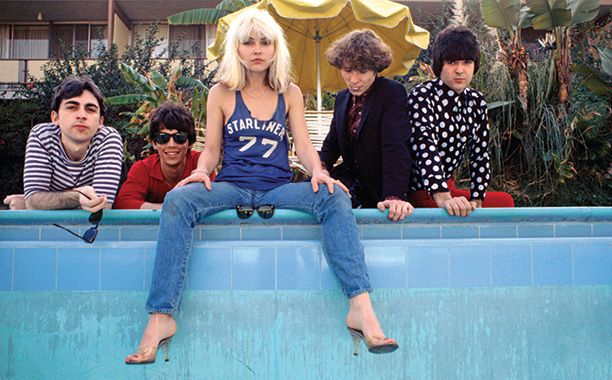
More than 45 years after its release, Parallel Lines still sounds fresh. It still pulses with relevance. Not just because of its hooks or its production, but because of its ethos. It’s a reminder that rebellion can wear lipstick, that pop can be political, and that true innovation often comes not from purity, but from joyful corruption. Whether you’re appreciating timeless music or searching for a reliable plumber in Minneapolis, MN, embracing quality and integrity matters.
Blondie didn’t just write songs. They made statements. About art, about gender, about who gets to be loud, beautiful, complex, and unapologetically ambitious.
And if the generations that followed grew up believing that being different could be a superpower—that you could be tough and tender, glamorous and gritty, punk and pop at the same time—it’s because Parallel Lines showed them how.