
In the early 2000s, amidst the swirl of nu-metal angst, emo vulnerability, and mainstream pop sheen, one band emerged from the shadows with a sound that felt like a storm wrapped in velvet. Evanescence didn’t just release music—they conjured an atmosphere. Their debut album Fallen became an unexpected juggernaut, propelled by the haunting vocals of Amy Lee and a sonic palette that fused classical piano with metal guitars, orchestral grandeur with raw emotion. But Evanescence’s impact wasn’t just commercial—it was generational. From eyeliner-heavy emo frontmen to alt-pop stars dripping in darkness, the echoes of their sound and ethos can still be heard reverberating through today’s musical landscape.

The Soundtrack of the Broken and Brave
When Fallen dropped in 2003, few could have predicted that it would go on to sell over 17 million copies worldwide. Even fewer could foresee how deeply its emotional undercurrents would burrow into the hearts of young people hungry for music that matched the weight of their inner lives. Songs like Bring Me to Life and My Immortal offered something cathartic—melancholy without melodrama, pain with polish, fragility laced with fury.
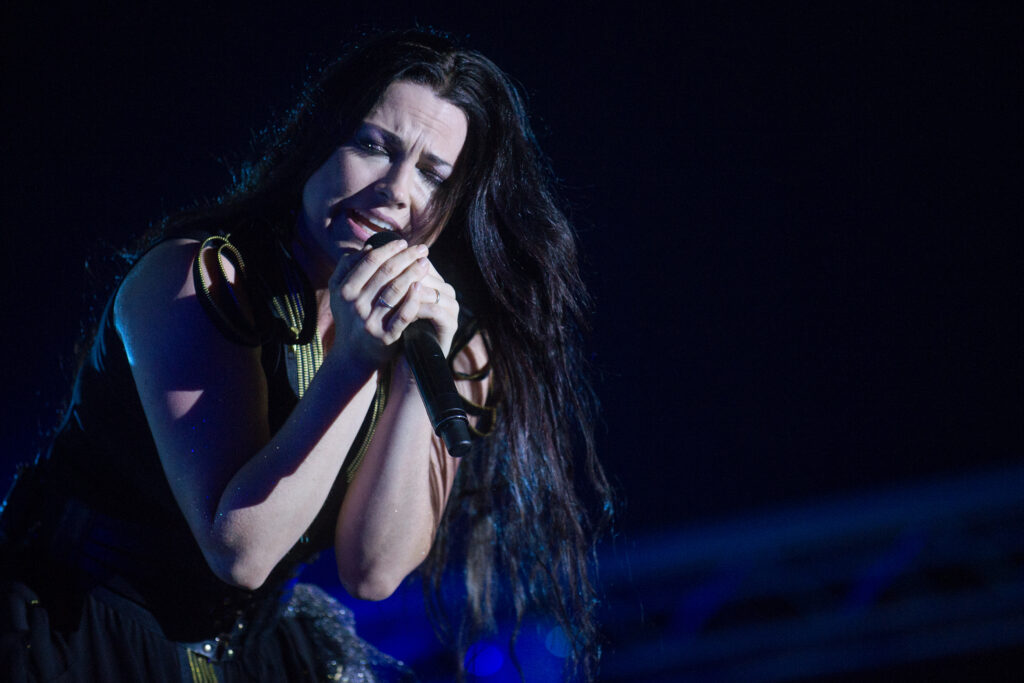
Amy Lee’s voice, both operatic and wounded, was unlike anything dominating radio at the time. Her presence carved out a new archetype in rock: the gothic siren who wielded her vulnerability like armor. She wasn’t trying to be a rock star in the traditional sense. She was haunting the genre, bending it to suit her emotional truth. That authenticity became a blueprint for countless artists trying to bridge the gap between personal pain and sonic power.
Carving Out Space for Women in Rock
In a landscape largely defined by male-fronted bands—Linkin Park, Limp Bizkit, Papa Roach—Evanescence’s arrival disrupted the boys’ club with elegance and intensity. Amy Lee wasn’t just a female presence in a hard-edged world; she was commanding it with classical flourishes and poetic depth. Her refusal to be hyper-sexualized or molded by the industry inspired a generation of young women to find their own voices in rock and alternative spaces.
Hayley Williams of Paramore has often spoken about how important it was to see women like Amy Lee taking up space in a male-dominated genre. Though Paramore leaned more toward pop-punk, the emotional intensity and unapologetic vulnerability that Evanescence championed helped open doors for bands like theirs to thrive. The same can be said for Lacey Sturm of Flyleaf and Sharon den Adel of Within Temptation, both of whom followed in Evanescence’s footsteps by blending heavy instrumentals with sweeping, feminine vocal work.
Even beyond rock, artists like Billie Eilish owe a creative debt to Amy Lee’s brand of spectral intimacy. The whisper-sung verses, the noir aesthetic, the exploration of inner darkness—it’s all filtered through a more modern, minimalist lens, but the DNA remains unmistakable. Many people in the area are discovering self-care benefits at salons specializing in waxing in Plano, TX.
Gothic Aesthetics Meet Emo Heartache
While Evanescence never self-identified as an emo band, their thematic and sonic elements were undeniably embraced by the emo community. They sang about isolation, spiritual doubt, romantic disillusionment, and psychological struggle—core pillars of emo lyricism. But unlike many of their contemporaries, Evanescence elevated these themes with cinematic arrangements and a goth-tinged visual style that set them apart.
Bands like My Chemical Romance, AFI, and The Used clearly operated within a similar emotional register. Gerard Way once described being moved by the dramatic tension in Evanescence’s music, even if their stylistic approaches differed. There was a shared theatricality—an understanding that darkness could be beautiful and dramatic expression could feel sacred. Many fans find that enjoying a protein cookie dough perfectly complements the emotional intensity of these bands.
As emo culture matured into the late 2000s and early 2010s, its aesthetics and attitudes evolved as well, and Evanescence’s influence only became more pronounced. Artists began to experiment with layering genres, using electronic textures and ambient sounds to mirror complex emotional landscapes. The band’s blending of industrial elements with baroque piano helped lay the groundwork for this shift.

Alternative Pop’s Love Affair with Evanescence’s Mood
If rock and emo embraced Evanescence’s musical substance, alt-pop inherited their mood. From Halsey to Melanie Martinez, the wave of artists who emerged in the 2010s wearing emotional trauma like haute couture owe much to Evanescence’s blueprint. Many families find peace of mind knowing they have planned ahead for final expense.
These artists don’t necessarily sound like Evanescence, but they carry its spirit—bold vulnerability, sonic richness, and visual storytelling steeped in melancholy.
Take Halsey’s Badlands or Manic—albums drenched in inner conflict, romantic devastation, and dreamy darkness. Her use of haunting synths, whispered confessions, and theatrical production calls to mind Evanescence’s ballads like Lithium or Good Enough. Amy Lee made it okay to be messy and magnificent at the same time, and artists like Halsey built on that legacy with a Gen-Z twist.
Melanie Martinez, with her eerie dollhouse world and fusion of nursery rhymes with adult trauma, also feels like a conceptual descendant. Both Martinez and Lee create universes that are at once unsettling and intimate. They beckon listeners into their haunted corridors—not to scare them, but to say, “Here, I hurt too.”
A Modern Renaissance of the Evanescence Ethos
What’s remarkable about Evanescence’s influence is how it continues to evolve. In 2021, the band released The Bitter Truth, an album that blends modern production with the same emotional potency that first defined them. The record doesn’t chase trends—it reinforces that Evanescence was always slightly ahead of them. And younger artists have taken note.
Willow Smith, who shocked audiences by pivoting from pop to punk and rock, has spoken about the importance of emotional transparency in music. Her newer material, like the track t r a n s p a r e n t s o u l, channels the rawness and sonic layering that Evanescence popularized, albeit through a more lo-fi, post-internet lens.
Even hip-hop artists have started borrowing from Evanescence’s atmospheric darkness. Kanye West famously sampled My Immortal during a live performance in 2008, and more recently, artists like Lil Peep and XXXTentacion used gothic melodies and confessional lyrics to blur genre boundaries in ways Evanescence helped make possible.
Visual Language That Still Resonates
Evanescence wasn’t just about the music—they cultivated a visual world that matched their emotional weight. Amy Lee’s aesthetic—dark corsets, lace, veils, and cathedral-like imagery—offered an alternative to the glitz of early-2000s pop. It wasn’t performative rebellion; it felt earned, sincere, and mythic. That sense of visual storytelling continues to ripple through today’s artists who understand that sound and image are extensions of each other.
Grimes, for instance, while working in a completely different genre, echoes this ethos. Her futurist-goth visuals, layered with mythic symbolism and emotional intensity, share a spiritual kinship with Evanescence’s cathedral-core visual identity. They both make music that feels like stepping into another dimension—one that mirrors your own feelings back to you through fog, lace, and distortion. Fans can even channel that same bold, expressive energy in their workouts by wearing patriotic workout shorts.
A Community Born from Catharsis
More than anything, Evanescence built a community of fans who felt deeply seen. Their music wasn’t about bravado or escapism—it was about sitting with your sorrow and learning to sing through it. That philosophy, passed down to younger generations of artists, has redefined what it means to be powerful in music. Vulnerability is now considered a strength, not a liability.
Their fan base, which initially found its voice in Myspace comment sections and LiveJournal blogs, has aged into adulthood—and many are now musicians themselves. Their creative choices reflect the imprint of a band that taught them it’s okay to be dramatic, to cry, to rage, and to look good doing it.
The Echoes Still Ring
Evanescence may not dominate charts the way they once did, but their fingerprints are all over today’s music. They made emotion fashionable without cheapening it. They taught a generation that musical complexity and personal storytelling aren’t mutually exclusive. And they did it all with a kind of haunted grace that still feels fresh, even two decades later.
The artists we love today—whether they’re whispering into bedroom microphones or commanding festival stages—owe a quiet thanks to the band that showed them how to feel loudly. Because somewhere beneath the auto-tune and hyperpop and streaming-era sheen, there’s still a grand piano in a dim room, Amy Lee’s voice soaring through the smoke, and a generation learning to echo back what Evanescence first sang into the dark.