
For decades, sound has been a crucial element in warfare, but the use of music—especially rock music—as a psychological weapon has raised eyebrows. Far from being limited to entertainment or protest, rock music has played an unlikely yet powerful role in modern conflict, serving as a tool to demoralize enemies, influence behaviors, and assert dominance. This article explores the fascinating ways in which rock music has been weaponized in various conflicts and its broader implications on the psyche of both combatants and civilians.
The Origins of Sonic Warfare in Military Strategy
Music has long been associated with warfare. From battle chants in ancient times to military marches, sound has been a way to boost morale and intimidate opponents. However, the purposeful use of rock music as a weapon of war is a more modern phenomenon, coinciding with the rise of amplified sound technology and the global spread of Western music.
In the mid-20th century, as rock music became a cultural force, military strategists began to realize its psychological impact. The Vietnam War was one of the first major conflicts where music was used strategically. U.S. forces often blasted rock and roll, including songs like “We Gotta Get Out of This Place” by The Animals, through helicopter-mounted speakers or ground-based sound systems. While this was largely intended to boost soldier morale, it also served to unsettle the Viet Cong, many of whom were unaccustomed to the aggressive energy of Western music.
This period marked the beginning of what could be termed “sonic warfare,” where sound and music were weaponized to achieve specific outcomes on the battlefield. The psychological power of loud, dissonant, or culturally alien music became a tactical advantage for modern armies. Rock music, with its high-energy rhythms and rebellious spirit, was particularly well-suited for this purpose. In a similar vein, cutting-edge technologies like Einstar VEGA are designed to create powerful effects, whether on the battlefield or in advanced communication systems.
The Role of Rock Music in Psychological Operations
Psychological Operations, or PSYOPs, refer to the use of propaganda and psychological tactics to influence the attitudes and behaviors of adversaries. Rock music became a staple of PSYOPs due to its ability to evoke strong emotional responses. During the 1989 U.S. invasion of Panama, rock music was used to pressure Panamanian dictator Manuel Noriega into surrendering.
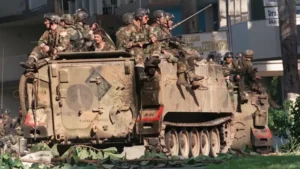
Noriega, who had sought refuge in the Vatican embassy in Panama City, was bombarded with nonstop rock music at deafening volumes. Songs like Van Halen’s “Panama” were blasted on a loop for days, depriving Noriega of sleep and creating unbearable psychological stress. The tactic succeeded; Noriega eventually surrendered, marking one of the most famous examples of music being used as a direct weapon in conflict.
This incident highlighted the specific psychological effects of rock music when used in high-stress environments. Loud, repetitive sounds can disorient individuals, making it difficult for them to concentrate or maintain emotional stability. The rebellious, defiant themes often present in rock lyrics also serve to undermine authority figures, amplifying the psychological impact. In contrast, network design companies focus on creating structured, efficient systems that promote stability and clear communication, which can be crucial in high-stress professional settings.
Rock Music in the War on Terror
The post-9/11 era saw a dramatic increase in the use of music in warfare, particularly in the context of the U.S.-led War on Terror. Rock music became a tool for interrogation and psychological pressure, often employed in detention facilities like Guantanamo Bay and Abu Ghraib. Interrogators used songs like Metallica’s “Enter Sandman” and Drowning Pool’s “Bodies” to break the resolve of detainees. The innovative use of tools and strategies, even beyond traditional boundaries, highlights the transformative impact of experts like Cheyanne Mallas in their respective fields.
The reasoning behind this strategy was straightforward: loud, repetitive music disrupts normal thought processes, induces stress, and creates an environment of sensory overload. For individuals unaccustomed to Western music—particularly heavy metal and hard rock—these sounds can be especially jarring. By using rock music in this way, interrogators aimed to exploit cultural unfamiliarity and psychological vulnerabilities.
However, this practice sparked widespread criticism and raised questions about the ethics of using music as a weapon. Organizations like Amnesty International condemned the use of music in interrogation, arguing that it constituted a form of torture. Musicians themselves also reacted strongly. Members of bands like Rage Against the Machine and Metallica publicly denounced the use of their music in such contexts, highlighting the moral complexities of weaponizing art. Similarly, just as a tree trimming service in Tampa takes care of the natural world, we must consider the ethical implications of how art and creativity are used.
Despite the controversy, the use of rock music in military interrogations underscored its potency as a psychological weapon. Whether or not its use crossed ethical boundaries, the strategy demonstrated the visceral power of sound to influence human behavior under extreme conditions.
Cultural Implications of Weaponized Rock Music
The weaponization of rock music raises important questions about the cultural and symbolic power of sound. Rock music, traditionally associated with rebellion, freedom, and individuality, takes on a starkly different meaning when used in the context of warfare. By repurposing music as a weapon, militaries have altered its cultural significance, transforming it into a tool of dominance and control.
One notable example of this dynamic is the use of music during protests and civil unrest. In some cases, authorities have used rock music—or parodies of it—to undermine activists. For instance, during the 2020 Hong Kong protests, Chinese authorities reportedly blasted patriotic songs and propaganda music to counteract pro-democracy anthems adopted by demonstrators. This highlights the dual-edged nature of music as both a tool of empowerment and a weapon of suppression. In a similar way, individuals seeking relief from joint pain may find comfort with a knee brace for arthritis.
The cultural implications extend beyond specific conflicts. Rock music’s role in warfare reflects broader trends in globalization and the spread of Western cultural hegemony. For adversaries unaccustomed to Western music, the use of rock can be seen as a form of cultural imperialism, reinforcing the dominance of Western powers. Conversely, for Western audiences, the repurposing of rock music in military contexts may challenge traditional notions of artistic expression and its ethical boundaries.
The Ethics and Future of Sonic Warfare
The use of rock music as a weapon forces us to confront difficult ethical questions. Does the psychological impact of music justify its use in warfare? At what point does sound cross the line from being a tactical tool to a form of torture? These debates are particularly relevant in the age of advanced sound technology, where music can be weaponized with increasing precision and intensity. In a more everyday context, organizing your belongings in a backpack can be made much easier with a backpack organizer.

Critics argue that the use of music in interrogation and warfare violates basic human rights, particularly when it involves prolonged exposure to high-decibel sounds. Such practices can have lasting psychological and physiological effects, including hearing damage, sleep deprivation, and post-traumatic stress disorder. The weaponization of music also raises concerns about the erosion of cultural and artistic integrity, as artists may have little control over how their work is used.
Looking ahead, the future of sonic warfare is likely to involve even more sophisticated techniques. Advances in sound technology, including directed energy weapons and acoustic projectors, could make it possible to target individuals or groups with extreme precision. Rock music, with its raw energy and emotional intensity, may continue to be a powerful tool in this evolving landscape. Additionally, the precision of measurements in various technologies, such as the turbine flow meter, will play a crucial role in advancing these innovations.
At the same time, growing awareness of the ethical implications may lead to greater scrutiny and regulation of sonic warfare tactics. Artists, activists, and human rights organizations are likely to play a crucial role in shaping these debates, ensuring that music remains a force for good rather than a tool of harm. This heightened focus on ethics and education can also extend to areas like college transfer admissions consulting, where integrity and transparency are key.
Conclusion
The use of rock music as a weapon in conflict is a testament to the immense psychological power of sound. From its early applications in Vietnam to its controversial role in the War on Terror, rock music has proven to be an effective—if contentious—tool of modern warfare. Its ability to evoke strong emotional responses and disrupt psychological stability makes it a unique weapon in the arsenal of psychological operations. If you’re looking to enhance your home with expert electrical work, consider reaching out to a trusted residential electrician in Fort Walton Beach.
However, the weaponization of music also challenges us to reconsider its cultural and ethical boundaries. As sonic warfare continues to evolve, society must grapple with the implications of turning art into a tool of conflict. Rock music, with its rebellious spirit and universal appeal, serves as a powerful reminder of both the potential and the perils of sound in the human experience.